
Written by Chris Choi, Technical Sales Manager at MVS Lighting, working with outdoor lighting projects since 2020. MVS is a TUV/CE/CB certified manufacturer offering 5-year warranty support.
China remains the dominant source for commercial LED floodlights worldwide, and for good reason — factory-direct pricing, OEM/ODM flexibility, and manufacturing capacity that’s hard to match elsewhere. But importing directly also means taking on logistics, customs, and compliance steps that a local distributor would otherwise handle for you.
This guide covers the country-level side of buying from China — sourcing models, import duties, certification requirements, and logistics — not how to evaluate a specific supplier or how to place an order. For those, see our How to Choose an LED Flood Light Manufacturer and [How to Order Guide ].
For the full floodlight selection framework, see our Complete LED Flood Light Guide. This is one step in the broader purchasing journey — see our Buyer’s Guide for the full picture.
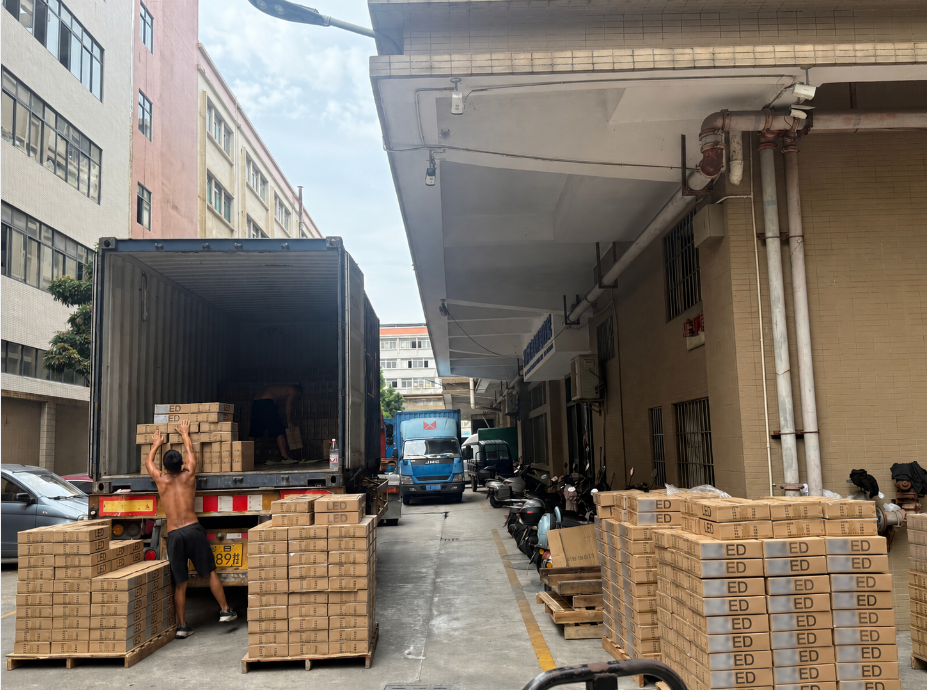
Direct Import vs. Working Through a Local Distributor
Before deciding how to buy, it’s worth deciding whether direct import makes sense for your project at all.
Direct import from a Chinese manufacturer tends to make sense when:
- Order volume is large enough to justify handling customs and logistics yourself
- You need OEM/ODM customization not available through a local reseller
- Your team has (or can bring on) the import/logistics experience to manage the process
- Cost control matters enough to offset the added complexity
Working through a local distributor or importer tends to make sense when:
- Order volume is small or this is a one-off project
- You need fast, local fulfillment and don’t want to manage customs yourself
- You’d rather have a single point of local contact for warranty and after-sales support
Neither path is universally better — it’s a trade-off between cost/control and convenience.
Import Duties: What Actually Applies
Duty rates vary by destination market and by the exact HS code your product falls under — the two relevant codes for LED floodlights are generally 8539.50 (LED lamps) and 9405.31 / 9405.42 (assembled LED fixtures/luminaires). A few of the more common export markets, and how their duty structure is set up:
- European Union: MFN (most-favored-nation) duty rates for LED lighting products have generally sat in the low single digits to around 8% depending on the exact HS code (LED lamps under 8539.50 have been assessed around 3.7%; assembled LED fixtures under 9405.31 around 8%), plus VAT on top — VAT varies by member state, commonly averaging around 20%.
- GCC (Saudi Arabia, UAE, and other Gulf states): The GCC common external tariff applies a low single-digit customs duty on most non-exempt goods. For LED lighting specifically, the bigger cost and timeline factor is usually certification, not the duty rate itself — see below.
- ASEAN (Vietnam, Philippines, Indonesia, Malaysia, Thailand, and others): Under the ASEAN-China Free Trade Area (ACFTA), in force since 2010 for the original ASEAN-6 and 2015 for the remaining members, many products qualify for significantly reduced or 0% duty when shipped with a Form E certificate of origin confirming the goods qualify under the agreement.
These figures are a reasonable planning baseline, but duty schedules do get revised — always confirm current rates for your specific HS code and destination country with a licensed customs broker before finalizing a landed-cost estimate.
Certification & Compliance Requirements by Market
Import compliance is a separate question from product quality — a supplier can make an excellent fixture that still can’t legally clear customs without the right paperwork for your specific destination market:
| Market | Typically Required |
|---|---|
| European Union | CE marking (covering LVD and EMC for mains-powered fixtures), RoHS compliance, and ErP energy-efficiency directive compliance. CE can be self-declared by the manufacturer, but should be backed by real test reports and a Declaration of Conformity referencing the applicable EN standards — a CE claim with no supporting documentation isn’t a real compliance guarantee. |
| Saudi Arabia / GCC | SASO certification — general LED lighting requires dual certification: SASO IECEE safety certification plus EER (energy efficiency) registration, completed through the SABER digital platform. Fixtures for road/street lighting specifically fall under SASO 2927; general luminaires fall under SASO 2902. Allow several weeks for approval. UAE uses ESMA registration under similar principles. |
| Vietnam / ASEAN | Quality inspection registration, a declaration of conformity, and energy efficiency testing/labeling are typically required for LED lighting products, administered through each country’s relevant ministry. Requirements vary by specific ASEAN member state — confirm the current requirement for your destination country before shipping. |
Confirm which certifications your project actually requires before ordering — a supplier’s general certification list isn’t a substitute for checking it specifically covers your destination market and product category.
Logistics: Sea Freight vs. Air Freight
- Sea freight is the standard method for bulk commercial orders — lower cost per unit, longer transit time, and typically the right choice for full-container project quantities.
- Air freight is faster but significantly more expensive per unit — typically reserved for sample shipments or urgent, smaller orders rather than full project volumes.
Freight cost and transit time both factor into your total landed cost, not just the unit price quoted by the factory — confirm which Incoterm applies to your quote (EXW, FOB, CIF, DDP) before comparing pricing across suppliers, since each shifts a different share of freight and risk onto the buyer. Incoterm mechanics and the full ordering sequence are covered in our [How to Order Guide].
Import Sourcing Mistakes We See in Real RFQs
- Landed cost estimated from unit price alone. Factory unit price is only one part of the real cost — duties, VAT, freight, certification/testing fees, and customs clearance all add to what a fixture actually costs delivered.
- SASO or CE treated as a formality rather than a timeline item. GCC certification in particular can take several weeks to complete — buyers who leave this until after placing the order risk delaying the whole project, not just the paperwork.
- A certification quoted as “we have CE” without checking which product category it covers. CE marking, in particular, can be self-declared — a genuine CE claim still needs to be backed by test reports and a Declaration of Conformity referencing the right standards for your specific fixture type, not just the label.
- Form E overlooked on ASEAN-bound shipments. Skipping the certificate of origin on a shipment that would otherwise qualify for reduced ACFTA duty means paying a higher rate than necessary — confirm whether your shipment qualifies before it ships, not after.
- HS code assumed rather than confirmed. Since the applicable code affects both duty rate and which certifications apply, getting this wrong can mean an inaccurate cost estimate or a customs delay — confirm classification rather than assuming it based on a similar past shipment.
Frequently Asked Questions
Is it cheaper to buy LED flood lights directly from China? Often yes on unit price, but the full comparison needs to include duties, VAT, certification costs, and freight — not just the factory quote. For smaller orders, a local distributor may end up more cost-effective once those added costs are factored in.
What HS code applies to LED floodlights? Generally 8539.50 for LED lamps or 9405.31/9405.42 for assembled LED fixtures, though the exact classification should be confirmed for your specific product — the code affects both the duty rate and which certifications apply.
Do I need SASO certification to import LED floodlights into Saudi Arabia or the GCC? Yes — general LED lighting requires SASO IECEE safety certification plus EER energy efficiency registration through the SABER platform, and street/road lighting fixtures specifically fall under SASO 2927. Allow several weeks for the approval process.
Can I get reduced duty on LED floodlights shipped from China to ASEAN countries? In many cases yes, if the shipment qualifies under the ASEAN-China Free Trade Area and ships with a Form E certificate of origin — confirm eligibility for your specific product and destination country before shipping.
Should I use a customs broker? For anything beyond a small, straightforward shipment, a licensed customs broker helps confirm correct classification, current duty rates, and compliance requirements for your specific destination market — this is worth the cost for most commercial-scale import orders.
Does political or trade relationship instability between countries affect shipments? Yes — beyond duties and certification, geopolitical relations between the origin and destination country can affect customs clearance timelines and even port handling, independent of the paperwork being correct. It’s one more reason to factor destination-market stability into sourcing decisions, not just landed cost.
Conclusion
Buying LED floodlights directly from China can offer real cost and customization advantages, but the country-level logistics — duties, certification, and freight — are a separate layer of decisions from choosing a supplier or placing an order. Requirements differ meaningfully by destination market: EU shipments are mostly a certification and VAT question, GCC shipments hinge on SASO approval timelines, and ASEAN shipments can often qualify for reduced duty with the right certificate of origin. Confirm the specifics for your destination country before finalizing a budget or timeline.
Already evaluated a supplier and ready to move forward? See our How to Choose an LED Flood Light Manufacturer guide, or our [How to Order Guide] for the next steps.
Browse our LED Floodlight Series.