
Stadium lighting must deliver controlled illumination from high mounting positions while maintaining suitable visibility for athletes, officials, spectators and cameras. Venue size, mast height, seating areas and event level all influence the required output and optical configuration.
MVS supplies IP65 and IK10 LED stadium floodlights with precision optical options, low-flicker configurations, optional DALI or DMX512 control and a 5-year warranty. DIALux simulations and IES files are available for project verification before installation.
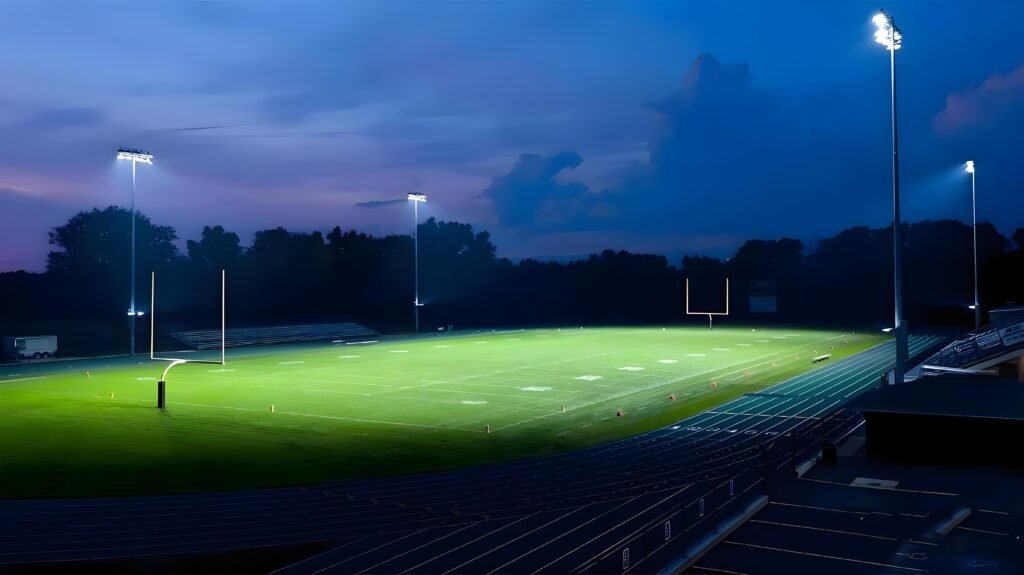
Stadium lighting must coordinate the playing surface, spectator seating, camera positions and operating modes within one system. High fixture output is only useful when the optics and aiming plan deliver light to the correct areas.
Stadium fixtures may be installed on masts above 20 metres or on roof structures. Narrow and medium optics are required to deliver useful illumination over long distances.
Horizontal illumination supports visibility across the playing surface, while vertical illumination helps spectators and cameras see athletes and moving objects clearly.
Fixture positions and aiming angles must avoid intense direct light in player sightlines, spectator views and important broadcast camera directions.
Professional and broadcast venues may require low-flicker drivers, suitable color rendering and stable output for slow-motion recording and high-resolution cameras.
Training, competition, broadcast, event setup and maintenance periods may require different lighting levels. The control system and driver configuration should be confirmed before production.
Stadium illumination and control requirements change according to the sport, competition level, spectator capacity and broadcast conditions. The figures below provide an initial project-planning reference.
Potential range for competition and professional stadium applications.
Common in large venues requiring long-distance illumination from fewer mounting points.
Supports separate modes for training, competition, broadcast and events.
| Venue Use | Lighting Priority | Optical Requirement | Control and Camera Consideration |
|---|---|---|---|
| Training Mode | Practical visibility with lower output and controlled operating cost. | Maintain basic field coverage while using only the required fixture groups. | Scheduled operation or reduced-output dimming mode. |
| Competition Mode | Higher illumination and stronger uniformity for athletes and spectators. | Multiple beam distributions for near, middle and far venue zones. | Full-field operation with controlled glare in player sightlines. |
| Broadcast Mode | Strong horizontal and vertical illumination for cameras and slow-motion footage. | Precision optics planned around field zones and important camera directions. | Low-flicker drivers, suitable color rendering and stable output. |
| Multi-Purpose Event Mode | Flexible illumination for ceremonies, concerts or non-sport activities. | Fixture grouping that allows selected venue zones to operate independently. | DALI or DMX512 scenes coordinated with the event operating plan. |
Important: The final lux level, uniformity, vertical illumination, color rendering and flicker requirements must follow the venue’s sport type, competition standard, camera system and tender specification.
Stadium projects involve long throwing distances, multiple visual audiences and complex control requirements. MVS reviews these conditions before confirming the fixture and system configuration.
DIALux calculations review horizontal illumination, uniformity, fixture quantity and preliminary aiming positions.
Important player, spectator and camera sightlines are considered when selecting optics and aiming directions.
Low-flicker, DALI or DMX512 configurations are matched to competition, broadcast and event operating modes.
Fixture weight, bracket direction, circuit grouping and access for future maintenance are reviewed with the project team.
Practical answers for venue owners, contractors and project teams planning high-mast lighting for professional and multi-purpose stadiums.
High-mast lighting uses tall poles, commonly above 20 metres, with several high-output floodlights mounted together. It allows large playing areas to be covered from fewer mounting points.
A preliminary range of approximately 500–2000 lux may apply, depending on the sport, competition level and broadcast requirements. The final value must follow the relevant venue standard and tender specification.
Glare is controlled through precision optical distributions, suitable mast positions and carefully calculated aiming angles. Player sightlines, spectator views and important camera directions should all be reviewed during the lighting simulation.
IP65 and IK10 provide a practical baseline for high-mast outdoor fixtures exposed to rain, dust, vibration and impact risk. The final requirement should match the project environment and specification.
Broadcast venues may require higher horizontal and vertical illumination, suitable color rendering, controlled flicker and strong uniformity. Camera positions and slow-motion recording requirements must be included in the design.
Yes. DALI or DMX512 control can support separate modes for training, competition, broadcast, events and maintenance. Fixture grouping, drivers and wiring should be confirmed before production.
Yes. MVS can prepare DIALux simulations and fixture configurations for venues used for football, athletics or multi-purpose events. The design can review different operating modes, field zones and control groups before installation.
Compare MVS high-output LED floodlights for stadium and high-mast projects, including wattages up to 1000W, precision optical distributions and professional control options. Final selection should be based on mast height, venue dimensions, competition level and broadcast requirements.
Review practical stadium projects or compare lighting requirements for specific sports and venue types.
Review practical high-output fixture combinations, mounting conditions and completed sports-field projects.
Read the case studies →Explore field-specific lighting requirements for training grounds and professional football competition.
View football lighting →Compare glare control and court-uniformity requirements for basketball and indoor-outdoor competition venues.
View basketball lighting →Return to the main category to compare lighting solutions for other sports fields, courts and recreation venues.
Explore sport lighting →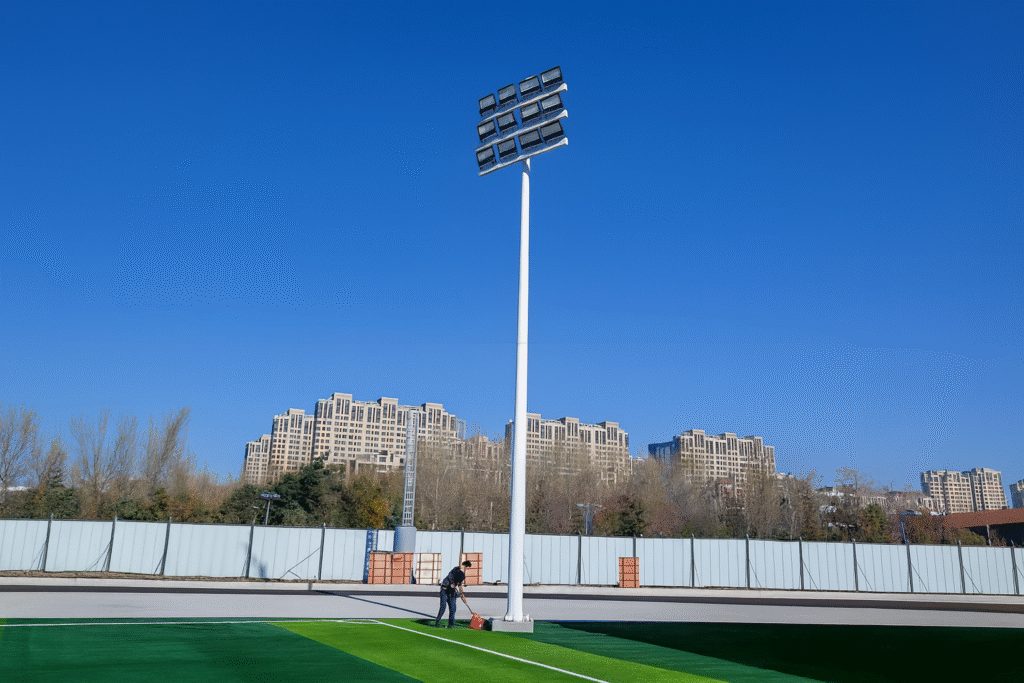
MVS Lighting
Professional LED Outdoor Lighting Supplier
Reply within 2 hours
Need LED lighting for your project?
WhatsApp Us
Online | Privacy policy
Get Quote on WhatsApp