01
Uneven Surface Brightness
Incorrect fixture spacing or beam selection can create bright centers, dark edges, and shadows across the advertising surface.

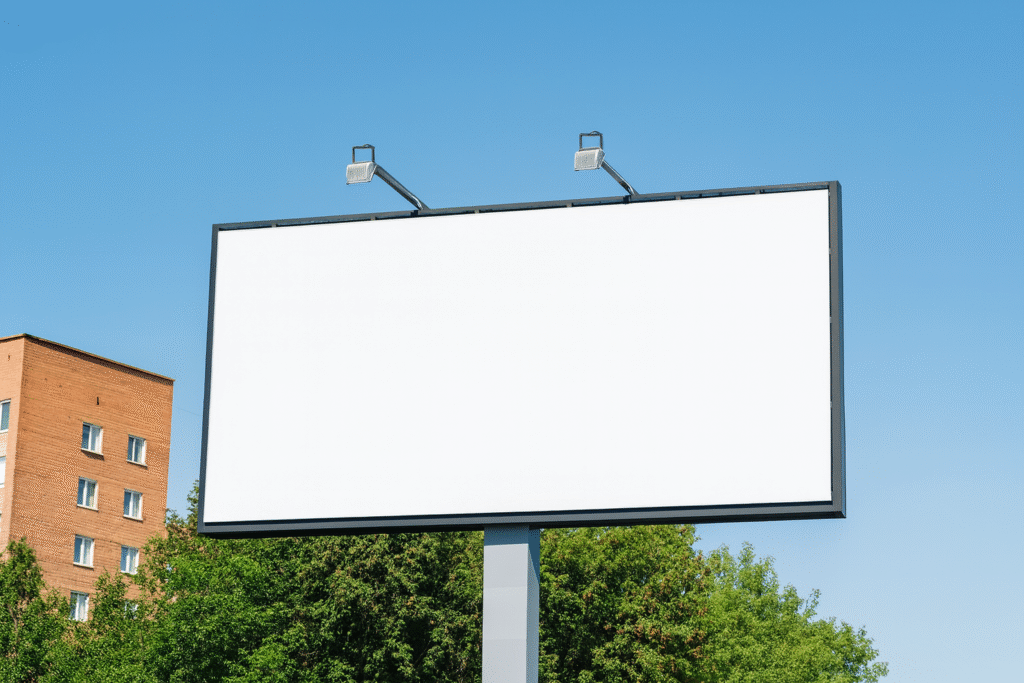
Billboard lighting requires uniform surface coverage and controlled beam direction so advertisements remain clear without causing glare for drivers, pedestrians, or nearby buildings.
MVS provides outdoor LED floodlights with flexible beam angles, IP65/IK10 protection, and optional dimming controls for roadside billboards and commercial signage projects.
Different billboard projects require different lighting layouts, beam angles, installation positions, and brightness levels. MVS provides professional floodlight solutions for outdoor advertising and commercial signage projects.
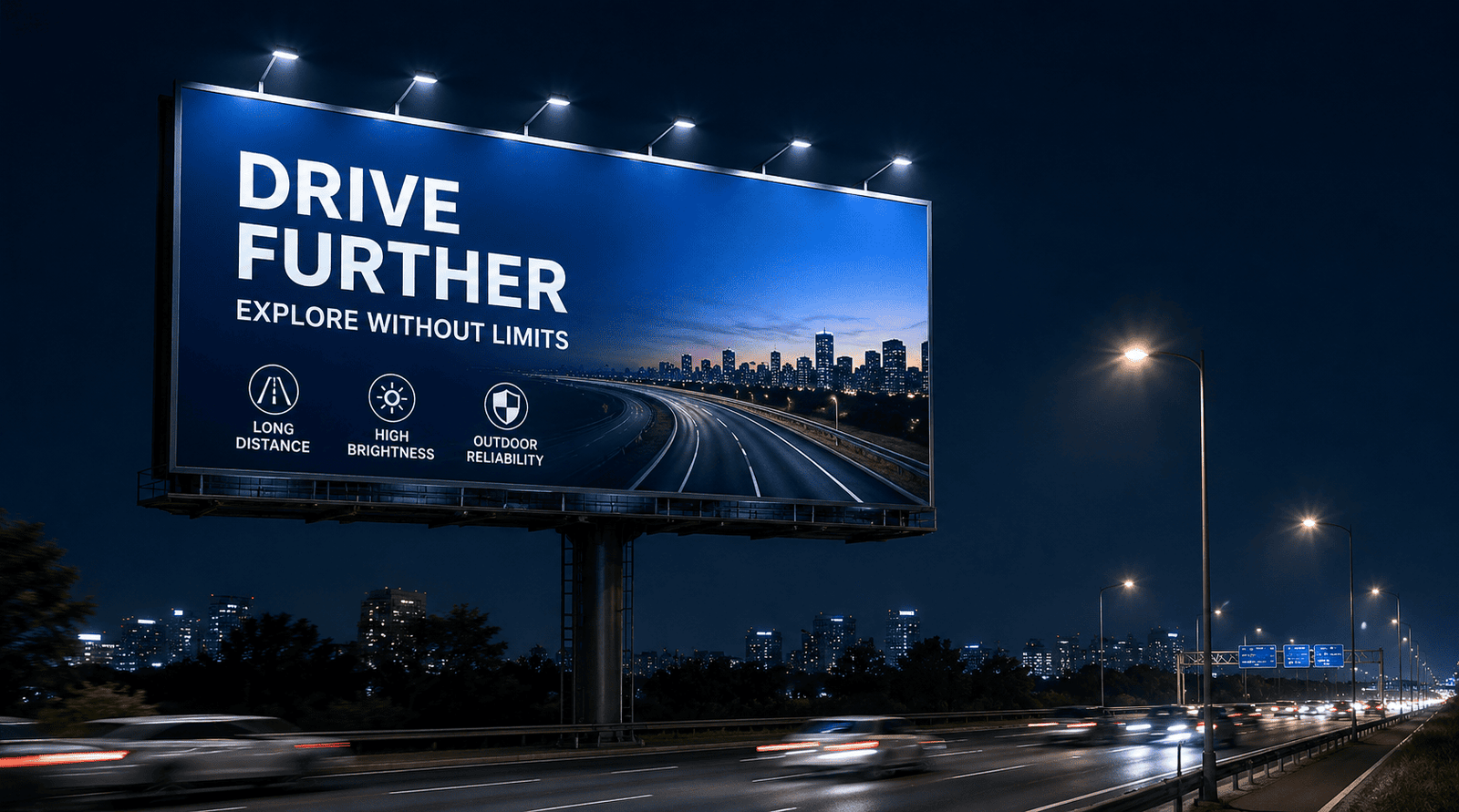
High power LED floodlights help improve long distance visibility for roadside advertising boards near highways and main urban roads.

Controlled beam angles help commercial signs stay visible at night while reducing unnecessary glare to nearby buildings and traffic.
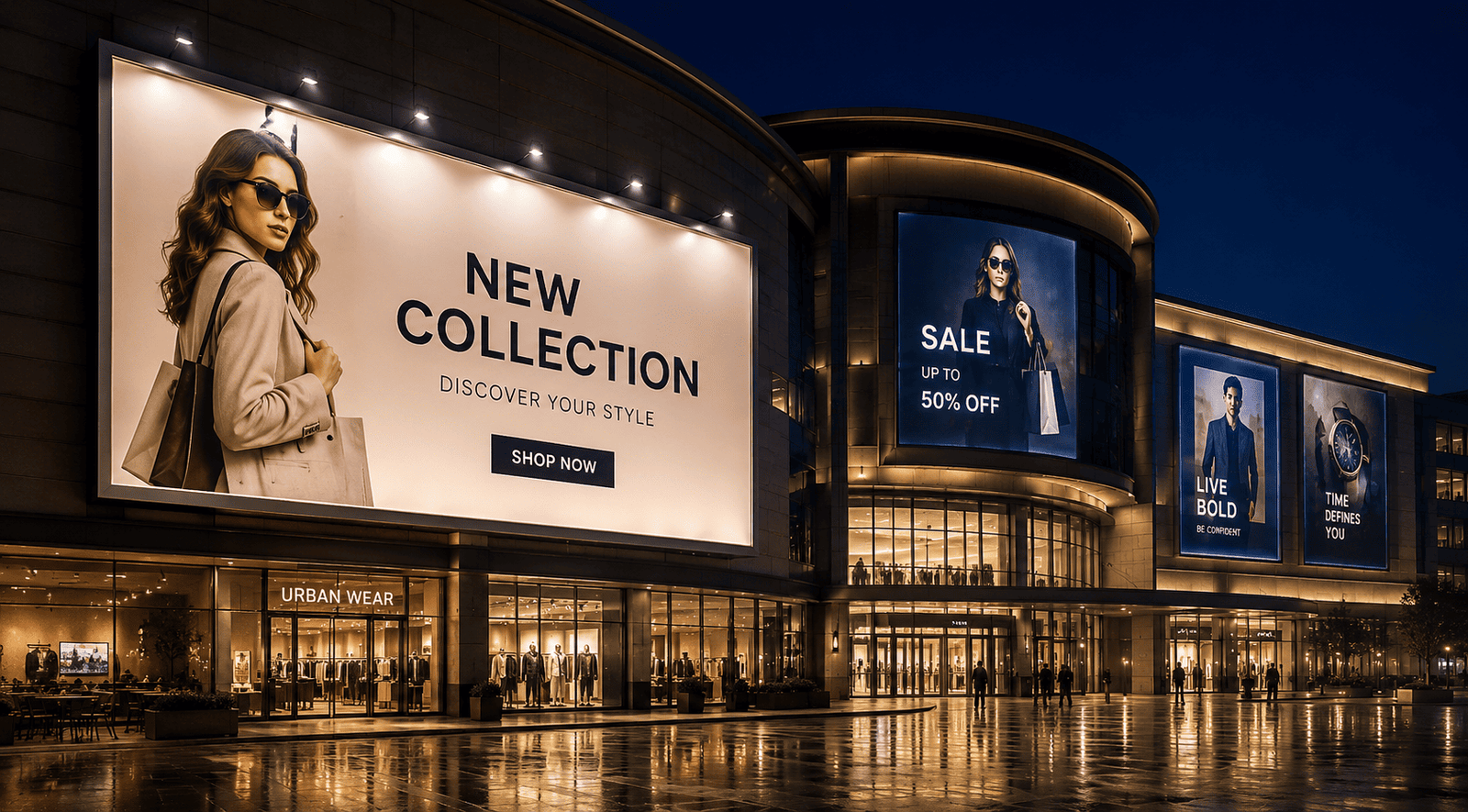
Uniform lighting improves nighttime visibility for shopping centers, outdoor retail signs, and commercial advertising displays.
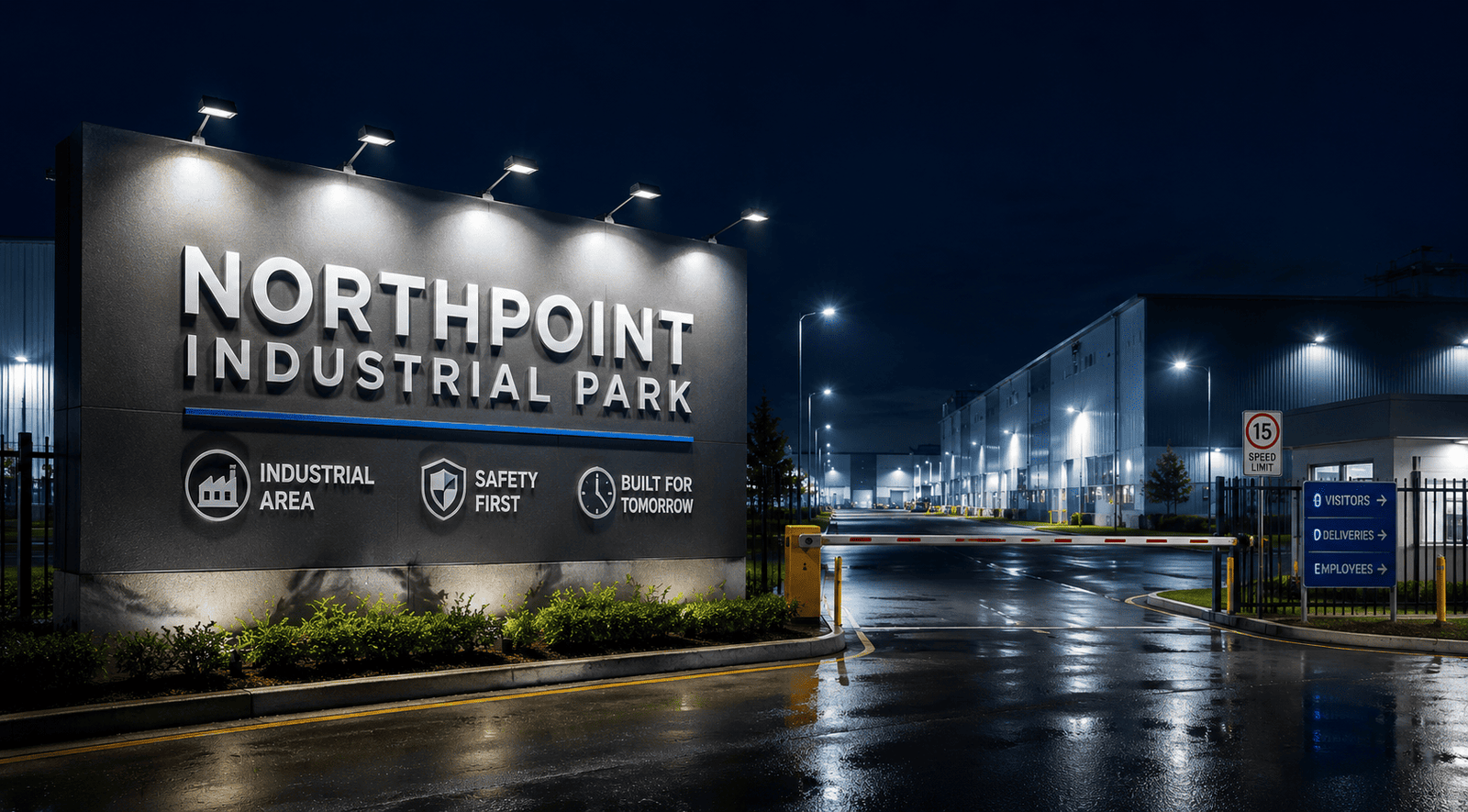
Durable outdoor lighting helps maintain clear visibility for factory entrances, industrial zones, and large commercial signage structures.
High brightness alone does not guarantee a clearly illuminated advertisement. The lighting system must balance surface uniformity, beam control, outdoor durability, and operating cost.
Incorrect fixture spacing or beam selection can create bright centers, dark edges, and shadows across the advertising surface.
Poor aiming may direct excessive light toward drivers, nearby buildings, pedestrians, or areas outside the billboard.
Fixtures installed in exposed locations must withstand rain, dust, heat, vibration, and long-term ultraviolet exposure.
Oversized wattages and uncontrolled operating hours increase electricity consumption without necessarily improving uniformity.
MVS matches floodlight power, beam distribution, installation distance, fixture quantity, and control method to the billboard dimensions and surrounding environment.
Suitable fixture spacing and overlapping beams reduce dark edges and excessive brightness in the center of the advertising panel.
Different optical distributions and adjustable aiming angles direct light onto the billboard while limiting glare and spill light.
Die-cast aluminum housings and IP65/IK10 protection support long-term operation in exposed roadside and commercial locations.
Timer, photocell, DALI, and 0–10V options can adjust operating hours and brightness according to local advertising schedules.
Every advertising structure has different dimensions, viewing distances, installation positions, and surrounding conditions. These factors should be confirmed before selecting floodlight power.
The width and height determine the required fixture quantity, beam overlap, and coverage needed across the advertising surface.
Longer distances generally require more concentrated beam control, while shorter distances may need wider distribution for uniformity.
Top, bottom, side, or ground-mounted arrangements affect shadow direction, glare risk, aiming angle, and maintenance access.
Roadside installations require careful aiming to keep direct light away from drivers and nearby traffic approaches.
Dark graphics and low-reflectance surfaces may require a different lighting arrangement from bright or highly reflective advertising.
Timers, photocells, or dimming schedules can reduce energy use when full brightness is unnecessary during low-traffic hours.
Common questions about floodlight power, beam selection, installation, outdoor protection, and lighting calculations for billboard projects.
There is no single wattage suitable for every billboard. The required power depends on the billboard dimensions, projection distance, mounting position, fixture quantity, surface reflectance, and target brightness. MVS confirms wattage after reviewing the project layout.
Narrow beams suit longer projection distances or tall advertising panels. Medium and wider beams suit shorter distances and broader surfaces. Several overlapping beams may be needed to maintain uniform coverage across a large billboard.
Both arrangements are possible. Bottom mounting is common when fixtures are easy to access, while top mounting may suit certain structures or help control light direction. The final position depends on the billboard frame, maintenance access, and glare risk.
IP65 or IP66 protection is normally recommended for fixtures exposed to rain, dust, heat, and long-term outdoor conditions. The required impact resistance should also consider the mounting location and maintenance environment.
Yes. MVS can provide IES files, DIALux simulation, fixture recommendations, and layout support when the billboard dimensions, mounting positions, projection distances, and project requirements are available.
Compare wattages, beam angles, mounting structures, protection levels, and dimming options for roadside billboards and outdoor commercial signage.
Review connected commercial and architectural areas when the billboard forms part of a larger outdoor lighting project.
Support nighttime visibility along retail streets, roadside business areas, and pedestrian commercial routes.
→Illuminate building exteriors and vertical surfaces surrounding commercial signs and advertising displays.
→Plan lighting for shopping-center entrances, outdoor displays, walkways, parking areas, and commercial surroundings.
→Coordinate multiple lighting zones for large commercial and mixed-use outdoor developments.
MVS Lighting
Professional LED Outdoor Lighting Supplier
Reply within 2 hours
Need LED lighting for your project?
WhatsApp Us
Online | Privacy policy
Get Quote on WhatsApp