01
Architectural Façades
Coordinate RGB or RGBW luminaires across building elevations to create static brand colors, gradual transitions and scheduled presentation scenes.

A DMX512 lighting control system provides precise control over brightness, color and programmed lighting effects. It is commonly specified for architectural and outdoor projects that require synchronized scene changes across multiple RGB or RGBW luminaires.
MVS supports overseas contractors, lighting designers and project buyers with compatible luminaires, channel planning, controller selection and control coordination. The system can be configured according to the project layout, fixture quantity, control zones and required lighting scenes.
DMX512, short for Digital Multiplex with 512 channels, is the global industry standard protocol used to control stage lighting, LED fixtures, and other entertainment or architectural lighting systems.
It acts as a universal language between controllers and fixtures, enabling designers and engineers to synchronize complex lighting effects across large installations with stability and precision.

A digital communication method designed for lighting control.

Each DMX universe supports up to 512 independent control parameters.

Data flows in one direction from the controller to the fixtures.
DMX512 operates on a channel-based communication system, where each channel represents a control parameter with values from 0–255 (8-bit resolution). These channels are grouped into a Universe of 512, and each fixture is assigned a starting address to determine which channels it should respond to. Data is transmitted in a daisy chain topology, ensuring multiple fixtures can be linked together with one controller.
Each channel controls one function, such as dimming, color, or movement.
A block of 512 channels that defines the maximum control range per network segment.
The starting channel number that tells a fixture which data belongs to it.
Fixtures are connected in series via DMX IN and OUT ports, with a 120Ω terminator required at the end of the line.
DMX512 systems rely on dedicated cables and connectors to ensure stable data transmission. While the official standard specifies 5-pin XLR, 3-pin XLR and RJ45 are also widely used in LED fixtures and architecture projects for practicality and cost efficiency. Cable and connector quality directly impacts signal integrity and reliability across long runs.
| Pin | Function | Label | Notes |
|---|---|---|---|
| 1 | Ground / Shield | GND | Screen / Drain wire |
| 2 | Data − | DMX- (Primary Complement) | Twisted with Pin 3 |
| 3 | Data + | DMX+ (Primary) | Twisted with Pin 2 |
| 4 | Spare / Secondary Data − | Optional | Rarely used |
| 5 | Spare / Secondary Data + | Optional | Rarely used |
As the most widely adopted lighting control protocol, DMX512 provides a balance of simplicity, compatibility, and scalability. However, like any technology, it also has certain constraints that engineers should consider during system design.
To overcome the 512-channel limitation and distance constraints of traditional DMX512, modern projects often adopt Ethernet-based protocols such as Art-Net and sACN. These systems encapsulate DMX data into network packets, allowing engineers to manage thousands of channels over standard Ethernet infrastructure with higher flexibility and reliability.
An open protocol widely used in entertainment lighting. It allows multiple DMX universes to be transmitted via standard Cat5/Cat6 cables.
A standardized protocol developed by ESTA, designed for large-scale installations with enhanced interoperability.
Uses standard Ethernet switches instead of simple daisy chains. At the installation site, nodes convert network data back into DMX signals for traditional fixtures.
Supports hundreds of universes, longer distances, easier integration with IT infrastructure, and higher system reliability.
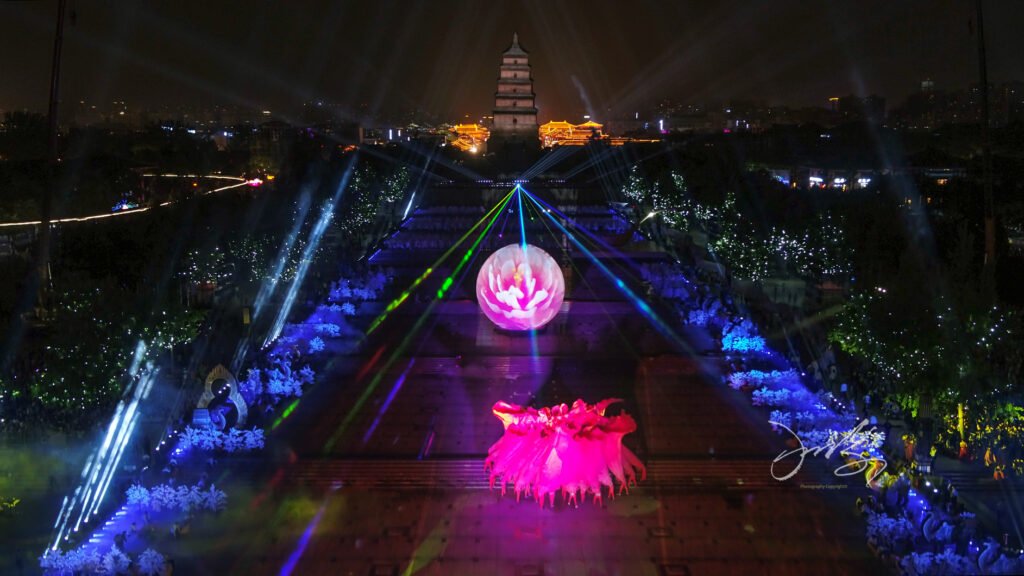
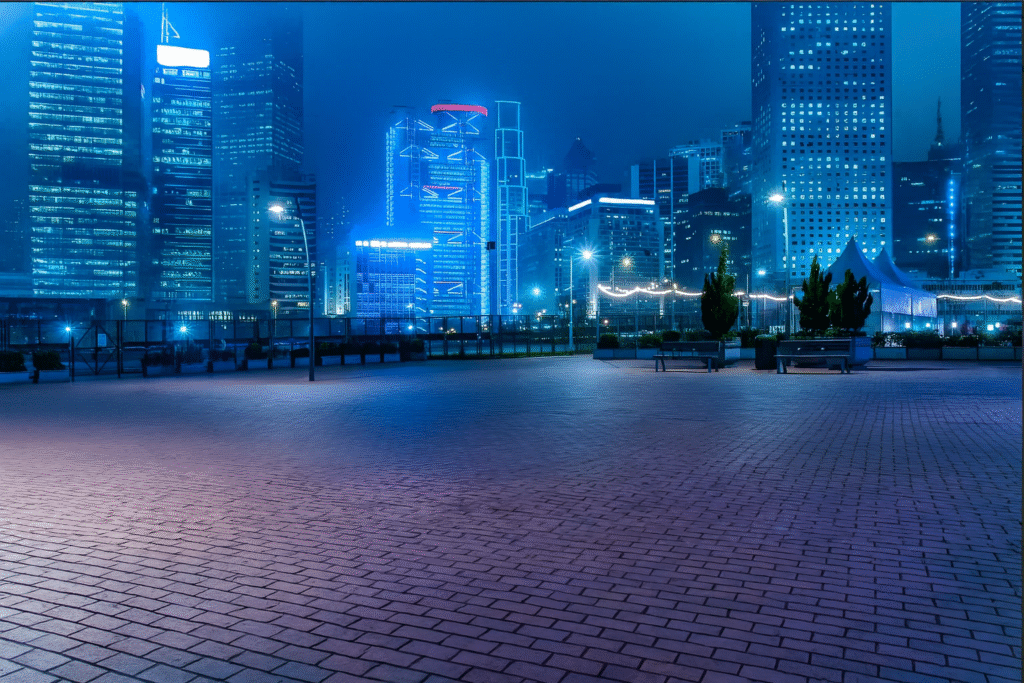
DMX512 is not limited to stage performances. Its flexibility and precision make it a core technology in many industries, from live events to architectural landmarks. By integrating DMX512 with LED fixtures, designers can achieve synchronized effects, dynamic color changes, and complex lighting patterns tailored to each project.
Real-time control of moving heads, strobes, and effects for dynamic shows.
Highlight building exteriors with colorful, programmable effects.
Synchronize large-scale floodlights with entertainment sequences or ceremonies.
Coordinate decorative lights to create immersive night-time experiences.
The following table summarizes the core specifications of DMX512, helping engineers design stable and reliable lighting control systems.
| Feature | Specification |
|---|---|
| Full Name | DMX512-A (Digital Multiplex 512) |
| Primary Use | Control of lighting fixtures, dimmers, and effects |
| Communication Type | Unidirectional, serial, digital |
| Channels per Universe | 512 (8-bit, 0–255 levels) |
| Physical Interfaces | 5-pin XLR (standard), 3-pin XLR, RJ45 |
| Topology | Daisy chain with terminator at end |
| Termination | 120 Ω resistor required at the last fixture |
| Max Cable Length | 300–500 m recommended (1000 m theoretical) |
When selecting lighting partners for DMX512-based systems, stability, compatibility, and engineering support are critical factors. MVS provides not only DMX-compatible fixtures, but also the technical expertise and customization required for demanding projects worldwide.

Our LED street lights, floodlights, façade fixtures, and high-mast lights are designed to integrate seamlessly with DMX512, Art-Net, and sACN protocols.

MVS offers DIALux lighting simulations, wiring guidance, and DMX addressing support, helping clients win tenders and optimize system design.

All products are built with premium drivers, IP66/IP67 protection, and IK08–IK10 durability, backed by a 5-year global warranty.
From standard DMX512 setups to advanced Ethernet-based control systems, MVS tailors solutions to meet project-specific requirements.
DMX512 is most suitable for projects where luminaires must produce coordinated color changes, programmed sequences or precisely repeated visual scenes. The fixture type and control architecture should be selected according to the scale and operating requirements of the installation.
Coordinate RGB or RGBW luminaires across building elevations to create static brand colors, gradual transitions and scheduled presentation scenes.
Divide long structures into independently addressed zones and synchronize color effects across floodlights, linear fixtures and other compatible luminaires.
Configure different scenes for daily operation, festivals and public events while keeping fixture groups organized by area or visual purpose.
Control decorative exterior lighting according to opening hours, special events and brand presentation requirements from a centralized controller.
Continue with the main smart-lighting hub or compare DMX512 with a digital dimming protocol designed for addressable general lighting.
These answers cover the main compatibility, capacity and installation questions raised during the planning of RGB and RGBW lighting projects.
One DMX universe provides up to 512 control channels. The number of fixtures supported depends on how many channels each fixture uses. A basic RGB fixture commonly uses three channels, while an RGBW fixture commonly uses four.
DMX512 is commonly used for fast, synchronized brightness and color effects in architectural or entertainment lighting. DALI is designed for addressable general lighting and supports grouping, scenes and two-way status communication.
Yes. The floodlights must include a compatible DMX decoder or driver, and all outdoor controllers, connectors and enclosures must have protection ratings suitable for the installation environment.
Yes. Fixtures assigned the same starting address will normally respond together as one control group. Give fixtures different addresses when the project requires individual or zone-based control.
Art-Net or sACN is useful when a large project needs to distribute multiple DMX universes through an Ethernet network. Compatible nodes then convert the network data into DMX output near the lighting equipment.
Provide the project drawing, fixture model, quantity, RGB or RGBW requirement, control zones, cable distances and required scenes. MVS can then coordinate the luminaires, channel allocation and basic control layout.
MVS can support fixture compatibility checks, channel calculations, address schedules, control-zone planning and sample testing before mass production. This helps overseas contractors confirm the lighting and control equipment before installation begins.
MVS Lighting
Professional LED Outdoor Lighting Supplier
Reply within 2 hours
Need LED lighting for your project?
WhatsApp Us
Online | Privacy policy
Get Quote on WhatsApp