01
Control Snow Reflection
Snow reflects a large amount of light. Excessive output or unsuitable aiming can create bright areas that reduce contrast and make surface changes more difficult for skiers to identify.

Our ski slope lighting solutions are designed to provide uniform brightness, excellent glare control, and long-lasting performance, even in extreme weather conditions. With advanced LED technology and IP65 waterproofing & IK10 impact protection, our luminaires ensure clear visibility for skiers and spectators while withstanding snow, wind, and freezing temperatures. By choosing MVS, you benefit from high luminous efficacy that reduces energy consumption and maintenance costs, making your ski slope both professional and sustainable.
Ski slope lighting must provide continuous visibility across changing gradients, turns and terrain transitions. The layout also needs to manage strong reflection from snow so skiers can judge surface conditions without excessive glare or distracting bright spots.
MVS supplies project-grade LED floodlights with controlled beam options, IP65 weather protection and IK10 impact resistance. We support overseas ski resort and winter sports projects with IES files, DIALux simulations, optical selection and a 5-year warranty.
Ski slopes are long, inclined and highly reflective environments. A suitable lighting design must help users identify the route and terrain while operating reliably in snow, wind and low temperatures.
Snow reflects a large amount of light. Excessive output or unsuitable aiming can create bright areas that reduce contrast and make surface changes more difficult for skiers to identify.
Lighting should guide users through gradients, turns, intersections and stopping areas. Large dark gaps between poles can interrupt visual guidance and reduce confidence when skiing at night.
Standard symmetrical lighting may waste light outside the slope. Controlled or asymmetric beam distributions can project useful light along the skiing direction and across changing terrain.
Floodlights, brackets, drivers and cables must withstand moisture, snow accumulation, strong wind and repeated low-temperature operation. Maintenance access also needs to be considered during layout planning.
Ski slope lighting should maintain visual continuity and terrain contrast. Simply increasing floodlight wattage can intensify snow reflection without correcting dark sections or poor beam placement.
Floodlight selection depends on slope width, gradient, pole position, mounting height and projection distance. The following ranges provide an initial reference before a project-specific lighting calculation.
| Application Area | Typical Mounting Height | Preliminary Power Range | Optical Priority |
|---|---|---|---|
| Beginner and Activity Areas | Approximately 6–10 m | 150–300W LED floodlights | Wider, controlled coverage for shorter projection distances and lower-speed activity zones |
| Training and Resort Slopes | Approximately 10–15 m | 300–500W LED floodlights | Medium or asymmetric distribution for continuous illumination along the skiing route |
| Large or Long-Distance Slopes | Approximately 15–18 m or higher | 500–1000W LED floodlights | Narrower or asymmetric optics for longer projection and large-area coverage |
Changes in elevation affect projection distance, aiming direction and how light reaches the snow surface.
Pole intervals must prevent dark gaps while avoiding excessive overlap and bright reflective areas.
Floodlights should project along the route without creating direct glare for skiers travelling uphill or downhill.
Product selection must consider snow, moisture, wind load, freezing temperatures and maintenance accessibility.
Planning note: These mounting heights and wattage ranges are preliminary references only. Final luminaire quantity, beam angle and power must be verified using the actual slope profile, pole layout and project lighting requirements.
Mountain lighting projects require more than a photometric layout. Drivers, brackets, electrical connections and maintenance arrangements must remain dependable during snow, moisture, wind and low-temperature operating conditions.
The driver and electrical components must be rated for the expected winter operating range. Cold-start performance should be checked against the lowest site temperature before product approval.
Adjustable brackets must hold the specified aiming angle during strong wind and vibration. Corrosion-resistant fasteners help maintain the installation during repeated wet and freezing conditions.
Cables, connectors and junction boxes require suitable ingress protection. Wiring routes should avoid locations where melting snow, ice movement or maintenance equipment may damage the connection.
Pole locations should allow inspection, cleaning and component replacement without blocking major ski routes. Access planning is especially important for remote poles and high mounting positions.
MVS can use slope drawings, elevation information and proposed pole positions to prepare a preliminary DIALux calculation. The simulation helps compare floodlight quantity, beam distribution and aiming before the equipment schedule is confirmed.
Project safety: Pole foundations, wind-load calculations, cable routing, earthing and electrical protection must be reviewed by qualified local engineers according to the site conditions and applicable regulations.
Practical guidance for resort operators, contractors and procurement teams selecting LED floodlights for night-skiing facilities.
Ski slopes normally use high-output LED floodlights with controlled beam distributions. The required wattage and optics depend on pole height, slope width, gradient, projection distance and the available mounting positions.
Snow reflects much more light than darker ground surfaces. Poorly controlled floodlights can create bright patches and glare that reduce visible terrain contrast. The design should prioritise controlled aiming and uniform coverage instead of excessive brightness.
The required level varies according to slope difficulty, skiing speed, recreational or competition use, operating rules and local standards. The final target should be provided by the project consultant or confirmed against the applicable sports and safety requirements before simulation.
Beginner areas may use lower mounting positions, while long resort slopes often require taller poles for wider or longer projection. Mounting height must be evaluated together with pole spacing, terrain, beam angle, wind load and maintenance access.
Yes, when the luminaire, driver, cables and connectors are rated for the expected operating temperature. The lowest site temperature and cold-start requirements should be provided before MVS confirms the final product configuration.
IP65 and IK10 provide a practical baseline for resistance to outdoor moisture, snow and mechanical impact. More exposed sites may require additional protection for connectors, junction boxes, brackets and surge-sensitive electrical components.
Yes. Depending on the project, MVS floodlights can support DALI, 0–10V or timer-based control. Resort operators can use different lighting levels during opening, normal skiing, low-traffic and closing periods when the control system is properly designed.
Yes. MVS can prepare a preliminary DIALux calculation using slope dimensions, elevation information, pole locations, mounting heights and target lighting requirements. IES files and product selection support are also available for project review.
MVS supports ski resorts and winter sports contractors with project-grade LED floodlights, controlled optical options and preliminary lighting simulations for demanding outdoor environments.
High-output LED floodlights for beginner areas, training slopes, resort routes and large ski facilities. Select the final model according to pole height, slope profile, projection distance and the required optical distribution.
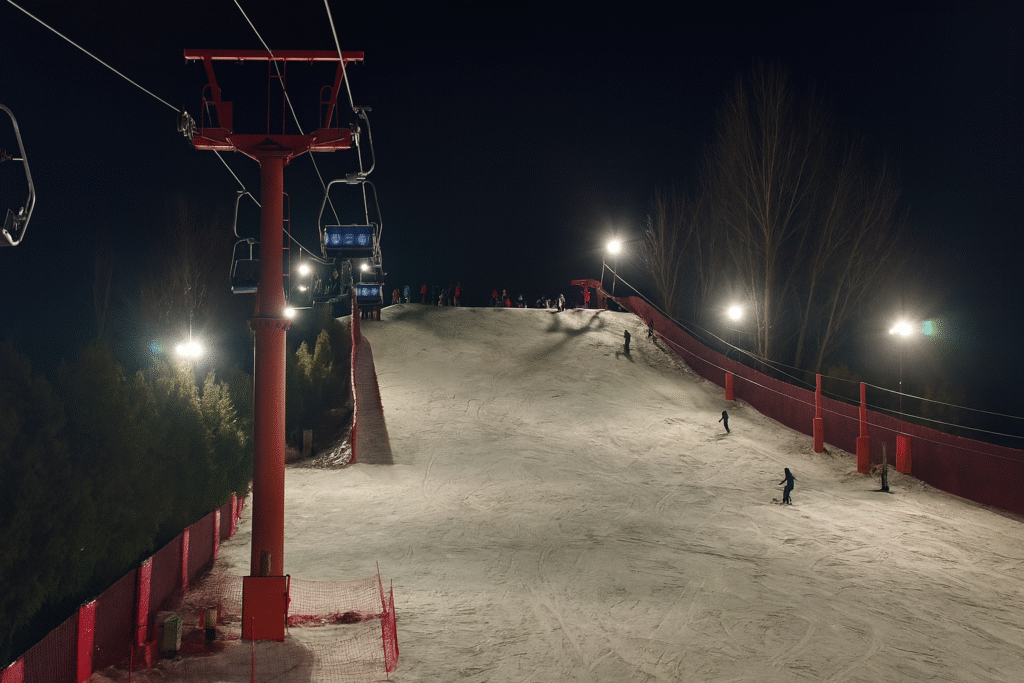
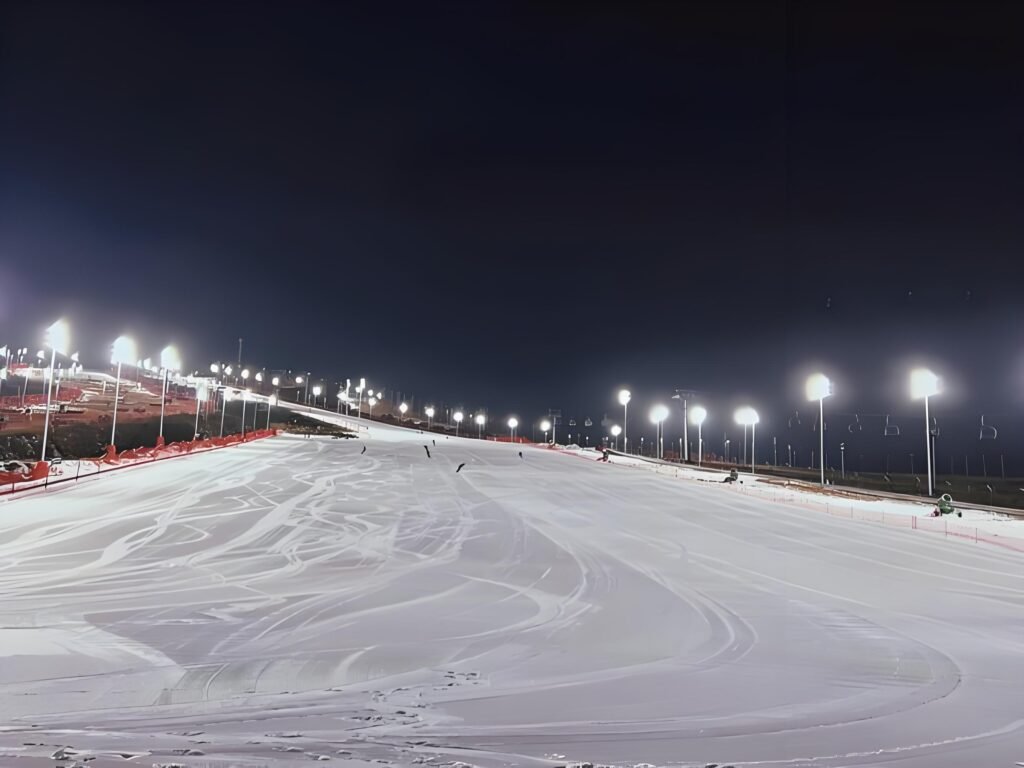
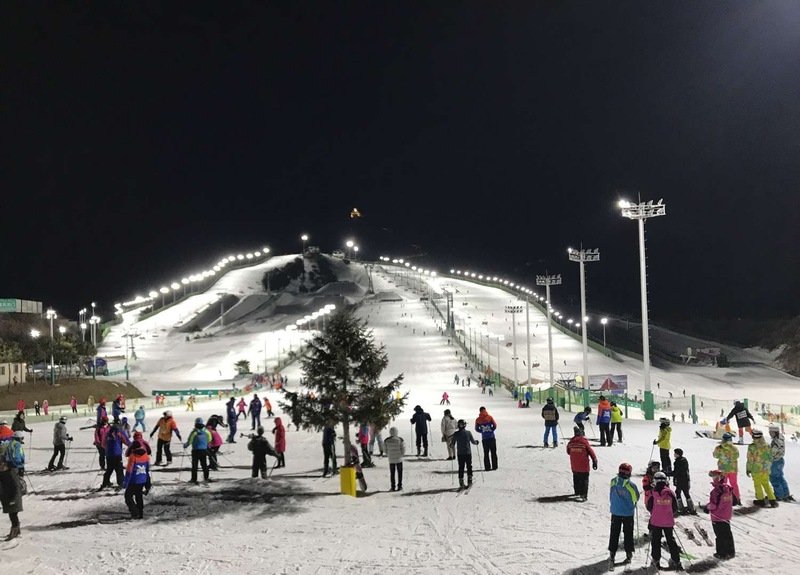
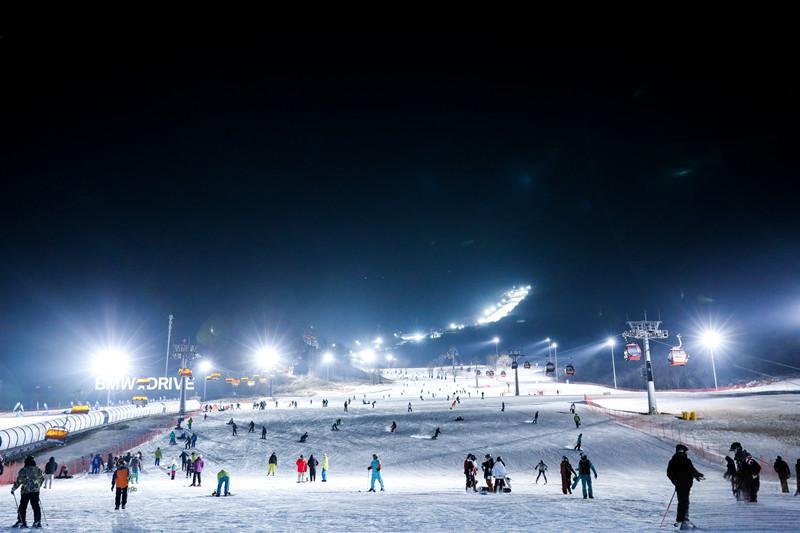
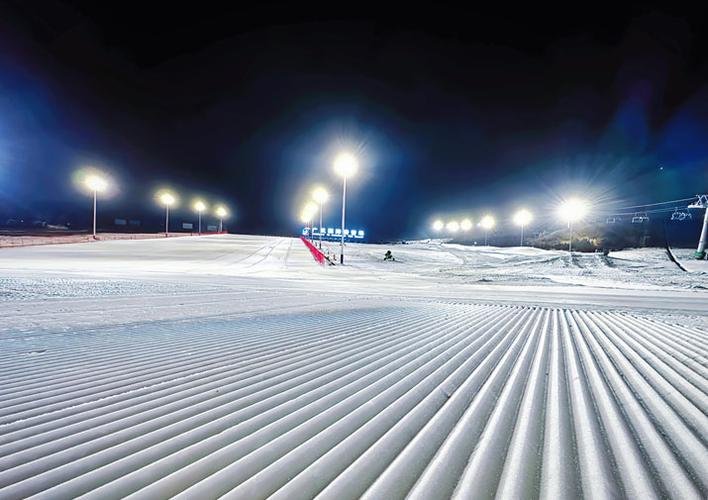
Each ski slope presents unique lighting challenges — from different slope inclines and lighting angle requirements to ensuring consistent brightness in extreme weather conditions. MVS works closely with you to design and implement the perfect lighting solution that suits your project’s exact needs. Our team provides free CAD layouts, DIALux lighting simulations, and smart-control integration to help you achieve energy-efficient, cost-effective, and sustainable lighting that meets international lighting standards.
Whether you’re working on a training slope or a professional ski resort, MVS ensures that your lighting system is engineered for high performance, long-lasting durability, and easy maintenance. With IP65 waterproofing and IK10 impact protection, our LED luminaires are built to withstand even the harshest winter environments. Backed by a 5-year warranty and full engineering support, MVS guarantees that your project is delivered on time, on budget, and ready for years of reliable service.
MVS Lighting
Professional LED Outdoor Lighting Supplier
Reply within 2 hours
Need LED lighting for your project?
WhatsApp Us
Online | Privacy policy
Get Quote on WhatsApp