01
Little or No Natural Light
Passenger routes, parking lanes and storage aisles rely on artificial lighting for orientation, movement and routine operational tasks throughout the day.

Underground light solutions must provide dependable visibility in enclosed spaces affected by humidity, limited natural light, restricted ventilation and long operating hours.
MVS supports lighting selection for metro stations, parking garages and basement warehouses. Fixture type, beam distribution and control method are matched to the layout, mounting height, environmental exposure and operating pattern of each project.
Enclosed underground facilities depend on artificial light throughout operating hours. Humidity, limited ventilation and complex layouts create different demands from open outdoor areas.
Passenger routes, parking lanes and storage aisles rely on artificial lighting for orientation, movement and routine operational tasks throughout the day.
Moist air and temperature changes can expose fixtures to condensation. Sealing, material selection and cable-entry protection must match the actual environment.
Limited mounting height can increase glare and create uneven illumination. Optics must distribute light across aisles and circulation areas without excessive brightness.
Many underground facilities operate continuously or for extended periods, making driver stability, thermal management and maintenance access important selection factors.
Metro passenger areas, parking lanes and warehouse aisles have different visibility and control requirements. One fixture and one beam angle should not be applied throughout every zone.
Underground lighting should be configured around the environment and movement pattern of each area. Fixture protection, optics and controls must work together as one project system.
Fixture housings, gaskets, fasteners and cable entries are selected according to humidity, condensation, dust and cleaning conditions within the underground facility.
Beam angles and mounting positions are matched to passenger routes, parking lanes, storage racks and working areas to reduce dark zones and excessive glare.
Efficient heat dissipation and dependable drivers support long operating hours in enclosed spaces where ventilation and maintenance access may be limited.
DALI, 0–10V or occupancy-based control can divide the facility into operating zones, helping reduce unnecessary energy use in low-traffic areas.
General underground lighting should be planned together with, but separately from, the legally required emergency and evacuation lighting system for the facility.
This page focuses on three enclosed underground environments. Each has different traffic patterns, mounting conditions and lighting-control requirements.
Reliable lighting supports passenger circulation, platform visibility and routine station operation in spaces that depend heavily on artificial light.
Lighting must provide clear visibility across vehicle lanes, ramps, parking bays and pedestrian routes while controlling glare under relatively low ceilings.
Storage aisles and working areas require uniform illumination selected around ceiling height, shelving layout, humidity and the movement of workers or handling equipment.
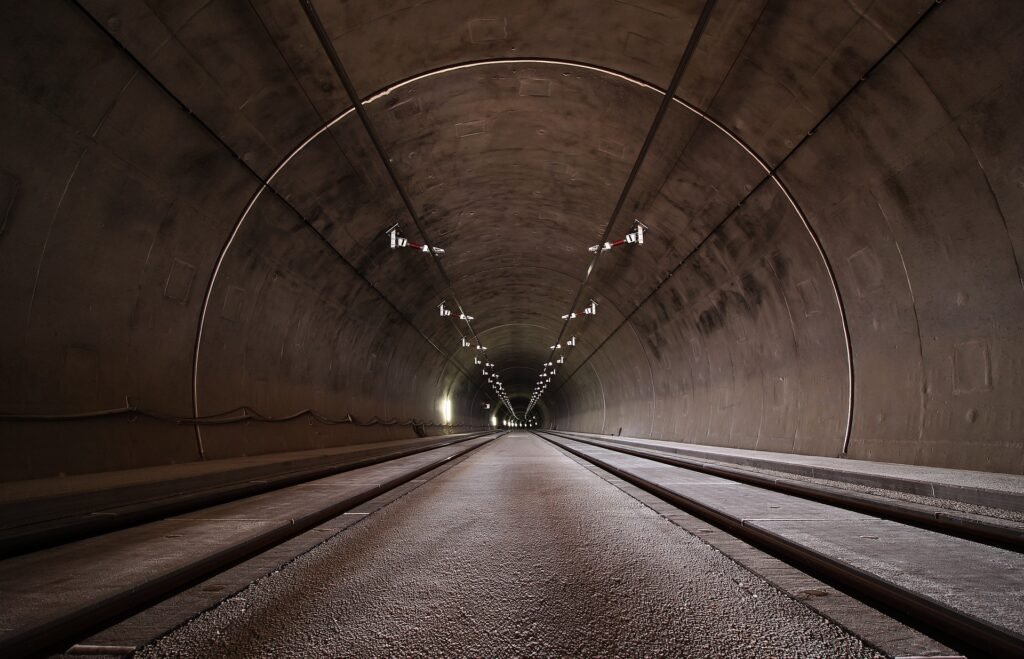
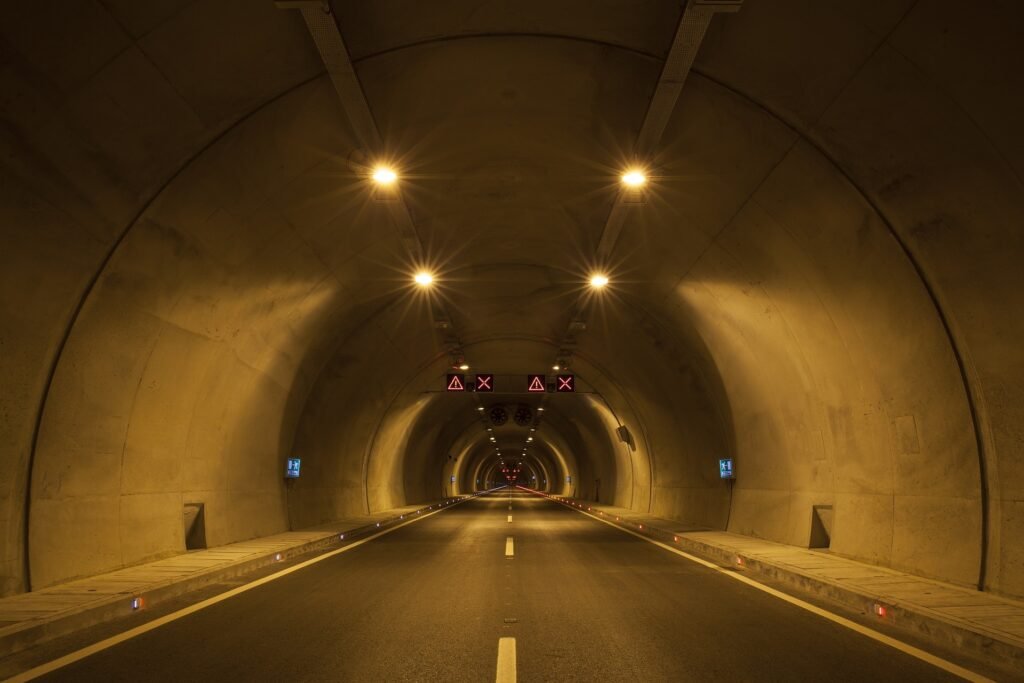
For road and vehicle tunnels: this page does not cover entrance, threshold or transition-zone lighting. See the dedicated Tunnel Lighting solution for those projects.
Mounting height, ceiling structure, environmental exposure and traffic pattern determine which fixture and beam distribution should be used in each part of the facility.
Key questions for project buyers planning lighting for enclosed underground facilities.
This solution covers metro stations, underground parking garages and basement warehouses. For road and vehicle tunnels, see our dedicated Tunnel Lighting page.
Underground facilities have little natural light and may experience high humidity, condensation, limited ventilation and long operating hours. Enclosed layouts and lower mounting heights also require careful glare and beam control.
Yes. Occupancy-based control can reduce unnecessary energy use in low-traffic parking zones and basement storage areas. The control strategy should maintain the lighting levels required for movement, operation and site safety.
The required rating depends on humidity, dust, condensation and cleaning exposure. IP65 may suit many enclosed areas, while locations exposed to stronger water ingress may require higher protection. The site conditions should be confirmed before specifying IP65, IP66 or IP67.
Provide the facility type, ceiling height, floor plan, required illumination, operating hours, humidity conditions and preferred lighting-control method for project review.
Lorem ipsum dolor sit amet, consectetur adipiscing elit. Ut elit tellus, luctus nec ullamcorper mattis, pulvinar dapibus leo.
MVS Lighting
Professional LED Outdoor Lighting Supplier
Reply within 2 hours
Need LED lighting for your project?
WhatsApp Us
Online | Privacy policy
Get Quote on WhatsApp