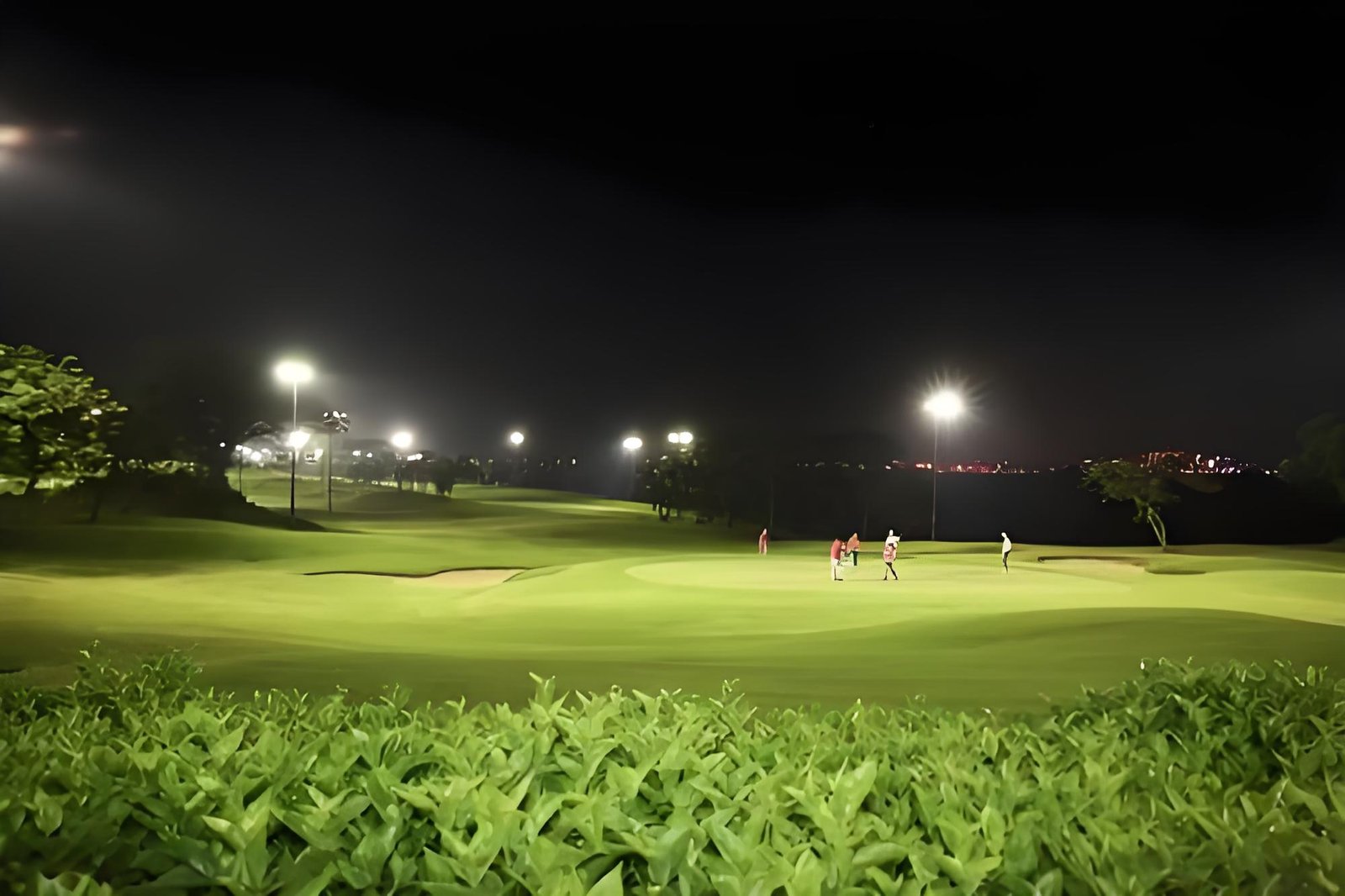
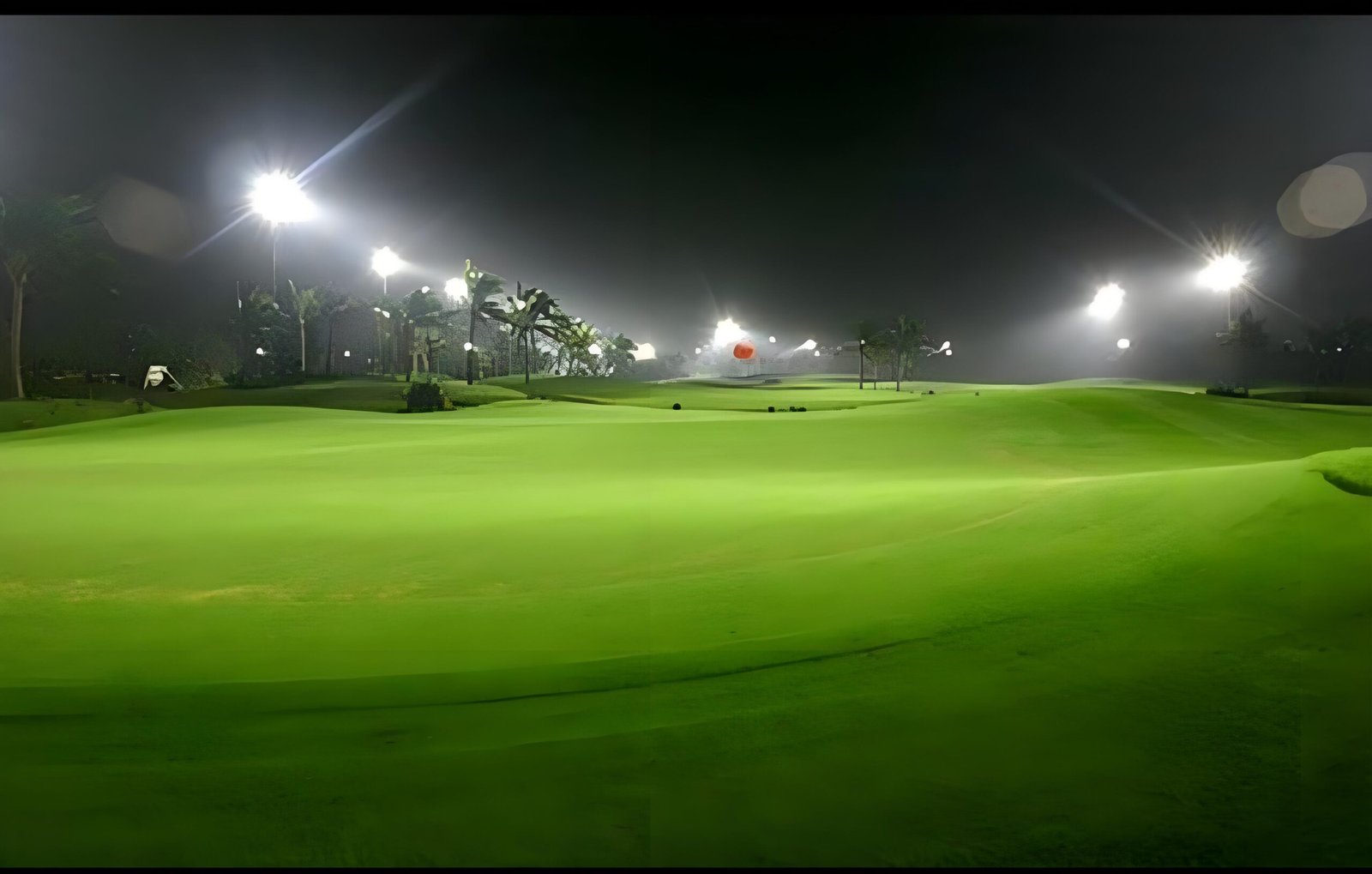
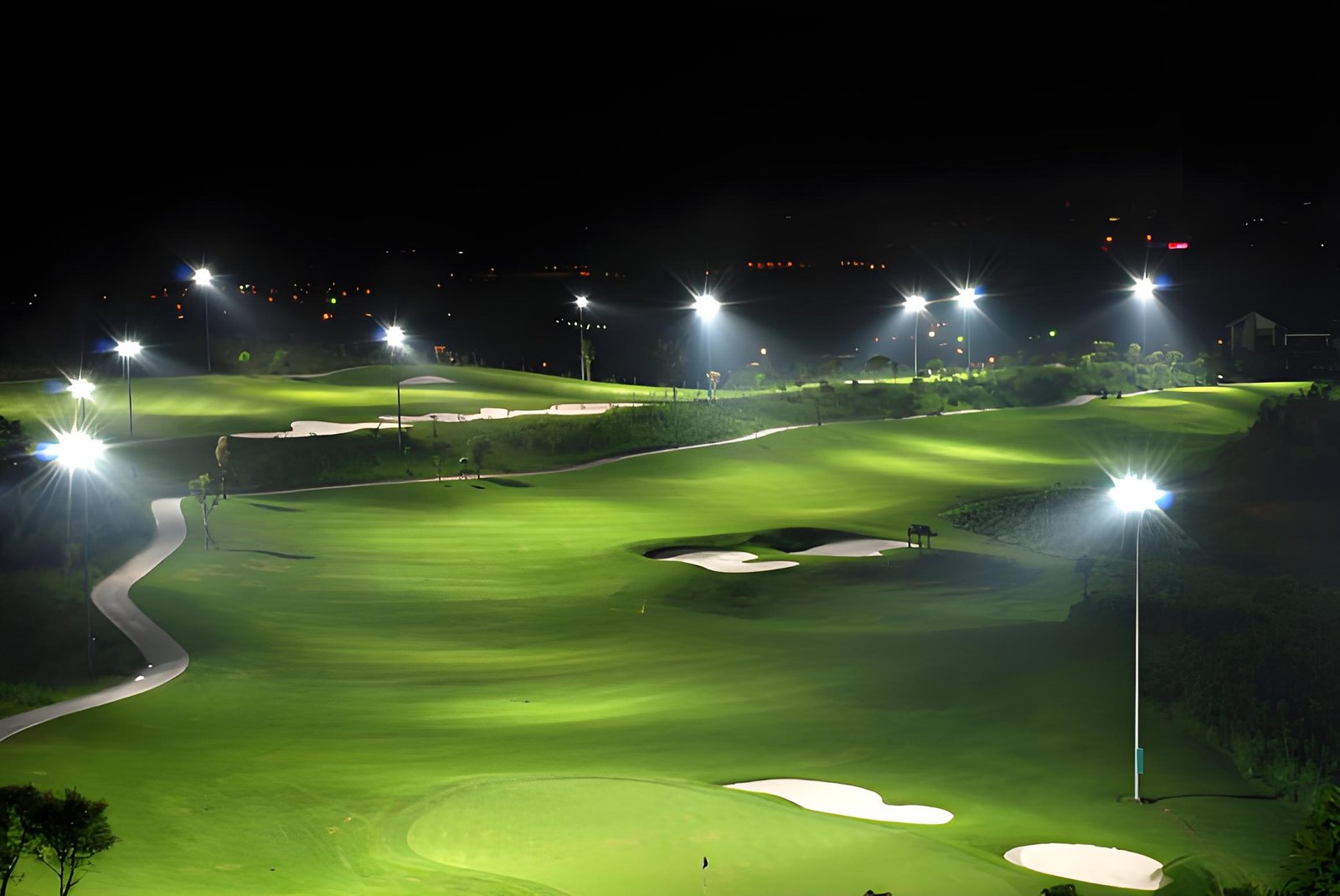
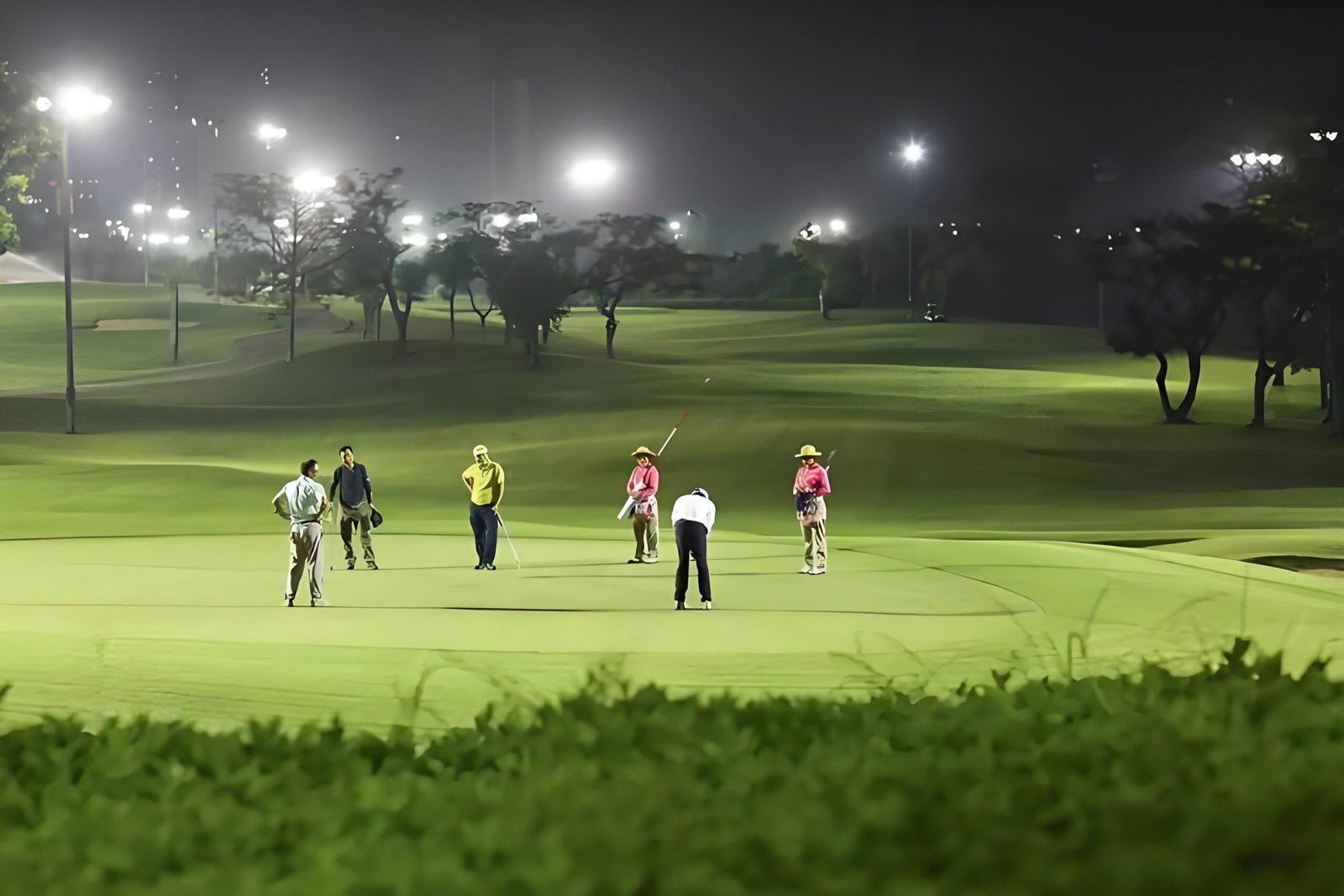
Golf lighting must support ball tracking over long distances while maintaining comfortable visibility for players and controlling unwanted light beyond the target area. Driving bays, landing zones, practice greens and circulation areas each require different optical distributions.
MVS supplies IP65/IP66 LED floodlights with high-output narrow and wide beam options, optional dimming controls and a 5-year warranty. IES files and DIALux simulations are available to help project teams review throwing distance, coverage and fixture aiming before installation.
Golf facilities combine long throwing distances with several visually different activity zones. A suitable design must support ball tracking without sending unnecessary light outside the intended area.
Players must be able to follow the ball from the hitting position through its flight and into the landing area. High output must be combined with suitable narrow and medium beam optics.
Driving ranges may be close to roads, buildings or residential areas. Correct fixture aiming helps keep useful light within the target zone and reduce unnecessary upward or backward light.
Fixtures near the tee line must be positioned and aimed carefully so players can look toward the ball flight without facing excessive direct brightness.
Tee areas, practice greens, fairways and distant landing zones do not need identical optics. Combining several light distributions improves coverage and system efficiency.
Fixture power and beam angle should be selected according to the target area, throwing distance, mounting height and required visibility rather than applying one configuration across the entire facility.
Preliminary range for different golf activity areas and usage levels.
Selected according to coverage distance and available installation positions.
Narrow to wide distributions for near, middle and distant target zones.
Power depends on mounting height, target distance and required illumination.
| Golf Area | Main Lighting Goal | Optical Approach | Design Consideration |
|---|---|---|---|
| Tee and Hitting Bays | Clear local visibility for ball placement, stance and club movement. | Wider controlled distributions with careful fixture aiming. | Limit direct glare within the player’s forward sightline. |
| Ball Flight Zone | Maintain sufficient vertical visibility to follow the ball through the air. | Medium and narrow beams aimed across different flight distances. | Balance output with spill-light control and neighbouring properties. |
| Landing Area | Make distant landing zones and reference markers visible from the tee. | Higher-output narrow distributions for long-distance illumination. | Verify aiming positions and coverage through lighting simulation. |
| Practice Greens | Provide comfortable and relatively uniform illumination for short-game use. | Wider overlapping distributions with lower mounting distances. | Control shadows and excessive brightness close to the fixtures. |
Important: These values are preliminary planning references. Final illumination, pole height, wattage and beam angles should be confirmed from the site layout, target distances, local light-spill requirements and project specifications.
Golf lighting requires project-specific planning because target distances, terrain, pole positions and surrounding properties differ from one facility to another.
Clear site information helps the engineering team prepare a more accurate initial lighting layout.
Tee areas, ball-flight zones, landing areas and practice greens are reviewed separately according to their visibility requirements.
Narrow, medium and wide beam options are combined according to throwing distance, mounting height and target coverage.
DIALux calculations help review estimated illumination, coverage, fixture quantity and aiming direction before installation.
The final configuration can include scheduled operation, DALI or DMX512 control according to the facility’s usage periods.
Practical answers for golf club owners, contractors and project buyers planning lighting for driving ranges and practice facilities.
High-output LED floodlights with multiple beam-angle options are commonly used. Narrow distributions can support long-distance illumination, while wider distributions are suitable for tee areas, practice greens and nearby activity zones.
The quantity depends on the range width and length, pole positions, mounting height, target illumination and required ball-flight visibility. A site layout and lighting simulation are needed before confirming the fixture quantity.
Golf lighting projects may use approximately 200W–1000W floodlights, depending on the mounting height and target distance. Several wattages and beam angles may be combined within the same facility.
A preliminary range of approximately 100–300 lux may be considered for different golf activity areas. The final level should reflect the usage type, local requirements and whether the area is a tee, practice green, ball-flight zone or landing area.
Light spill can be reduced through suitable pole positions, precise fixture aiming and controlled optical distributions. Nearby roads, buildings and residential properties should be marked on the site plan before the lighting layout is prepared.
Yes. Timer-based operation, DALI or DMX512 control can support different lighting modes for normal practice, events, maintenance and low-usage periods. The required control method should be confirmed before selecting drivers and wiring.
Yes. MVS can prepare DIALux simulations and provide IES files based on the site dimensions, target distances, pole positions and mounting heights. This helps verify estimated illumination, coverage and fixture aiming before installation.
Compare MVS LED floodlights for golf driving ranges and practice facilities, including high-output wattages, narrow-to-wide optical distributions and smart control options. Final selection should be based on mounting height, target distance and the required lighting zones.
Compare other outdoor recreation applications or return to the main sport lighting category.
Explore outdoor recreation lighting for ramps, bowls, rails and circulation areas with different surface levels.
View skatepark lighting →Return to the main category to compare lighting solutions for sports fields, courts and recreation facilities.
Explore sport lighting →MVS Lighting
Professional LED Outdoor Lighting Supplier
Reply within 2 hours
Need LED lighting for your project?
WhatsApp Us
Online | Privacy policy
Get Quote on WhatsApp