H
Pole / Fixture Height
6–12 m
Typical deck-mounted height for road bridges, urban overpasses, and elevated traffic crossings.

Bridge decks require uniform illumination and strong glare control to maintain clear visibility for drivers across elevated and exposed road sections.
MVS bridge lighting combines roadway optics, wind-load-rated mounting, resistance to continuous vibration, and IP65/IK10 protection for dependable operation in long-span infrastructure projects.
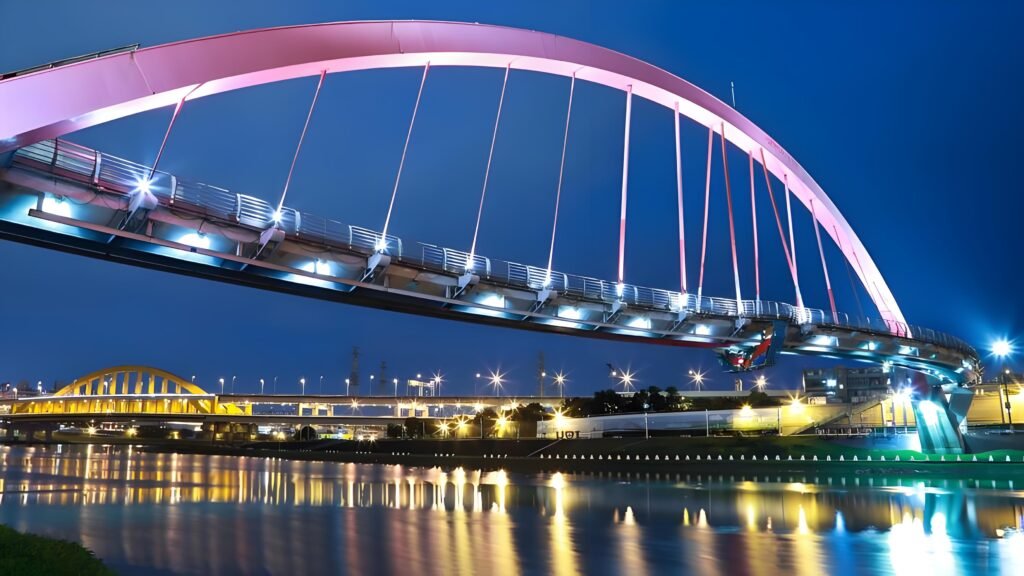
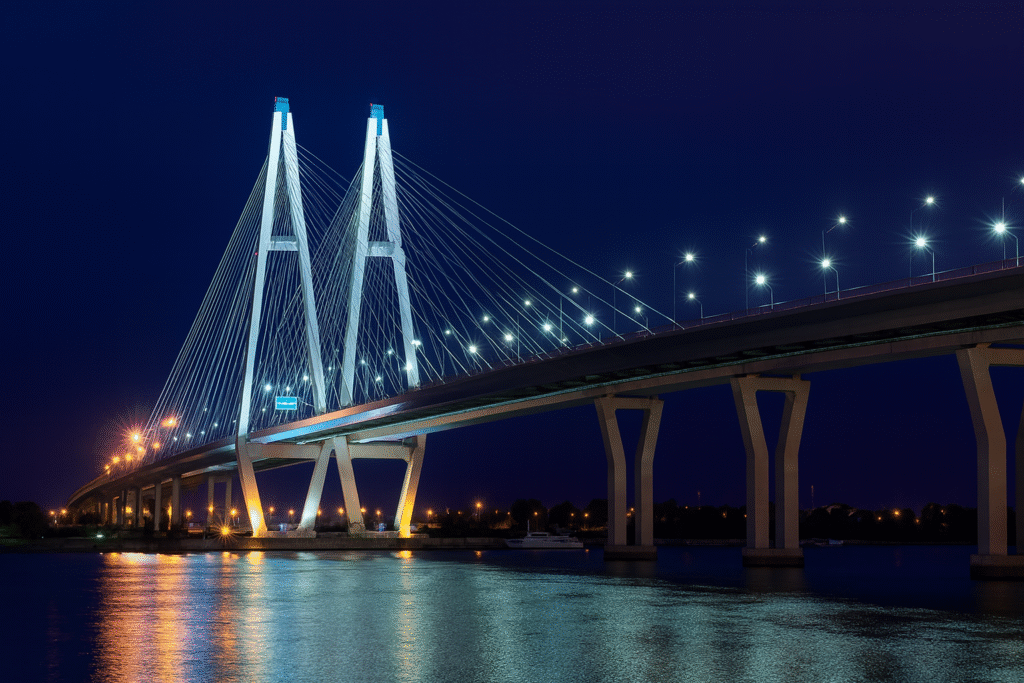
Bridge lighting must provide continuous road visibility while accounting for exposed mounting positions, wind load, structural vibration, restricted shoulders, and moisture around river crossings.
Typical deck-mounted height for road bridges, urban overpasses, and elevated traffic crossings.
A practical reference range for maintaining continuous illumination across the bridge deck.
General reference levels for supporting visibility across bridge traffic lanes and approach sections.
Final wattage depends on bridge width, mounting height, pole spacing, roadway optics, and target lighting levels.
Controlled roadway optics help maintain visibility where drivers have limited shoulders and fewer alternative sightlines.
Durable fixtures and wind-load-rated mounting support operation under rain, vibration, impact, and exposed bridge conditions.
These values are general planning references. Final fixture output, spacing, optics, and mounting hardware should be confirmed according to the bridge structure, road width, traffic speed, wind conditions, local standards, and project lighting calculations.
Bridge deck lighting requires roadway fixtures that can maintain consistent illumination under exposed mounting conditions. Wattage, optical distribution, surge protection, and mounting hardware should be selected according to the bridge structure and traffic requirements.
MVS provides project-grade LED streetlights with multiple wattages, roadway optics, reliable driver options, smart-control compatibility, and durable configurations for bridge decks and approach roads.
Explore our LED Street Light Series to compare available wattages, structures, roadway optics, and project configurations.
Flexible output levels for different bridge widths, mounting heights, traffic lanes, and approach sections.
Optical distributions selected to improve deck uniformity while limiting direct glare for approaching drivers.
Reliable LED modules, drivers, surge protection, and durable housings support continuous infrastructure operation.
Dimming, scheduling, and remote-control options support bridge energy management and centralized maintenance.
Practical answers about wind-load requirements, glare control, protection levels, and the difference between functional bridge-deck lighting and architectural accent lighting.
Elevated and unobstructed bridge spans can experience stronger wind loads than street-level roads. Poles, brackets, fasteners, and mounting structures should therefore be selected according to the bridge location and local wind-load requirements.
Bridge-deck lighting requires careful glare control, stable mounting, and resistance to continuous vibration. Drivers may also have restricted shoulders and fewer alternative sightlines, making consistent road illumination especially important.
IP65 and IK10 protection is suitable for exposure to dust, rain, humidity, vibration, and potential impact. The complete installation should also use appropriately rated cables, connectors, brackets, and fastening hardware.
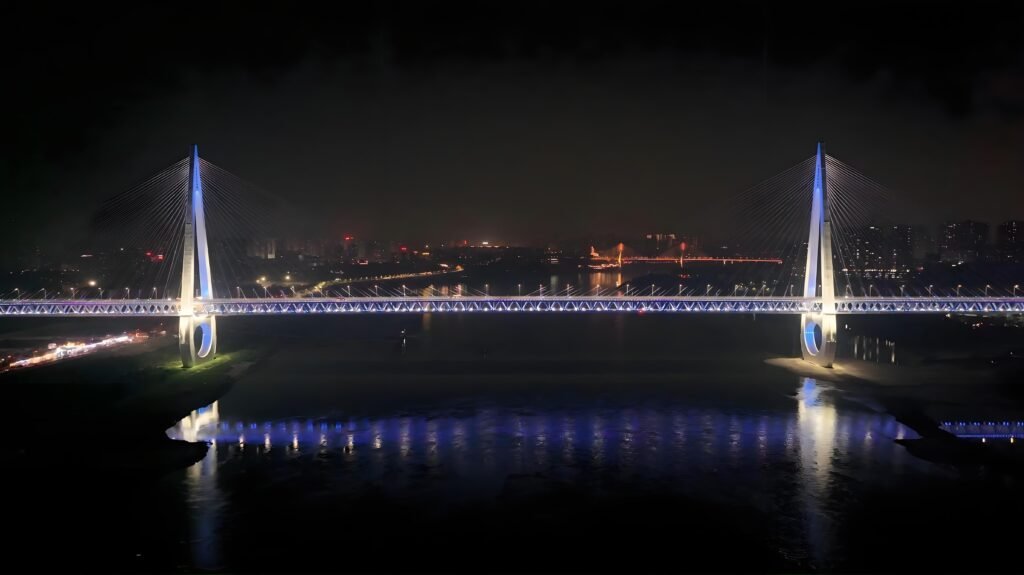
Yes. Bridge-deck lighting normally uses roadway fixtures for functional illumination, while piers, cables, railings, arches, and structural features can use a separate LED floodlighting system for architectural effects.
Bridge projects often connect road decks with waterfront areas, pedestrian routes, and traffic junctions. Explore these closely related applications for a coordinated infrastructure lighting plan.
Lighting for waterfront spaces, embankments, riverside routes, and public areas located beneath or around bridge structures.
View River Lighting →Continuous lighting for pedestrian paths, bridge-side walkways, approach routes, and public connectors surrounding the crossing.
View Outdoor Path Lighting →Lighting for roundabouts, junctions, and traffic-distribution areas connected to bridge approaches and elevated road systems.
View Roundabout Lighting →MVS can assist with streetlight selection, roadway optics, pole layouts, wind-load mounting considerations, lighting calculations, and control configurations for bridge decks and approach areas.

MVS Lighting
Professional LED Outdoor Lighting Supplier
Reply within 2 hours
Need LED lighting for your project?
WhatsApp Us
Online | Privacy policy
Get Quote on WhatsApp