
River lighting should balance economic value, public safety, visual character, and environmental responsibility along waterfront areas.
MVS solutions combine energy-efficient LEDs, smart dimming, controlled optics, and durable IP66 / IK10 protection to reduce operating costs, maintenance demand, and unnecessary spill light in riverside environments.
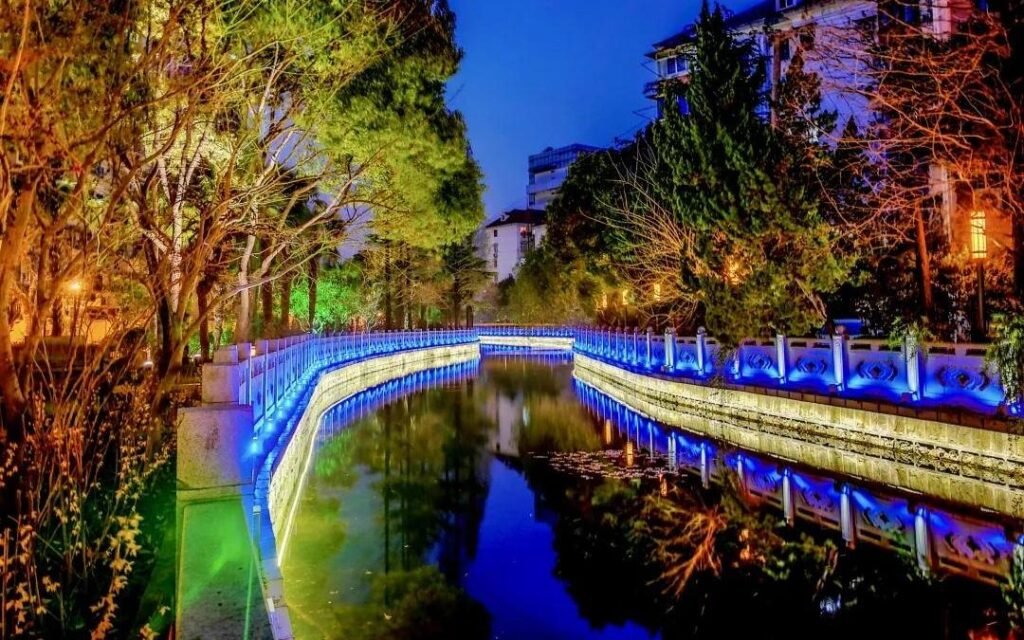
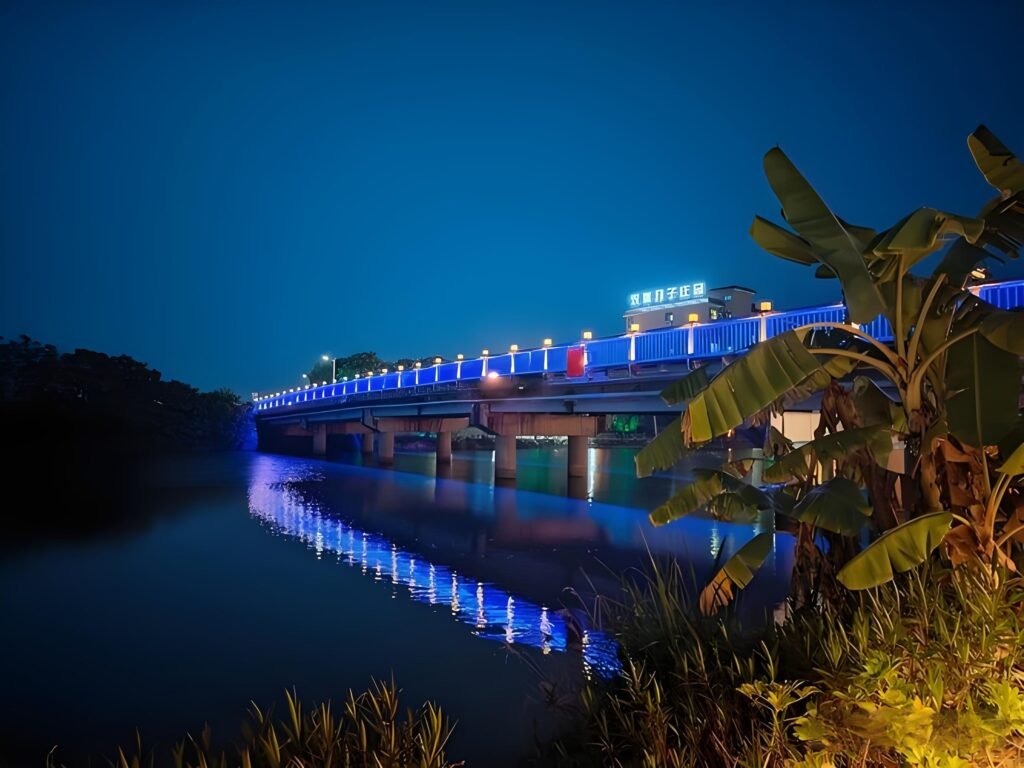
A well-planned river lighting system can support safe public use, strengthen a waterfront’s nighttime identity, and provide flexible control for everyday operation and special events.
During normal operation, controlled white lighting can support safe movement along riverside roads, promenades, steps, access points, and public gathering areas.
For festivals, cultural programmes, and tourism projects, RGB or RGBW fixtures can create dynamic colour scenes without requiring a completely separate lighting system.
DALI, DMX512, and IoT-based control options allow project teams to arrange schedules, adjust lighting scenes, manage different waterfront zones, and monitor system operation from a central platform.
Public Safety
Maintain clear visibility along walkways, access points, steps, and gathering areas.
Visual Identity
Use coordinated colour and light distribution to support the waterfront’s visual character.
Flexible Scene Control
Switch between daily lighting, reduced late-night levels, and event scenes.
Controlled Spill Light
Direct useful light toward the required area while reducing unnecessary light onto water and nearby residences.
These preliminary ranges apply to riverside roads, public walkways, promenades, access areas, and general waterfront lighting zones.
6–10m
20–30m
10–20 lux
50–150W
IP66 / IK10
Outdoor fixture referenceCorrosion-resistant coating should be considered for coastal, brackish-water, humid, or chemically exposed river environments. Final wattage, spacing, illuminance, optics, and material treatment must be confirmed according to the actual site and local project standards.
Once the waterfront zones and operating requirements are confirmed, compare suitable fixture configurations for riverside roads, walkways, promenades, and public areas.
This page explains the main requirements for river lighting projects. To compare available wattages, structures, optical distributions, smart controls, and customization options, review our LED Street Light Series .
Final selection should balance functional visibility, visual effects, light-spill control, environmental exposure, operating schedules, and long-term maintenance.
Waterfront Zone Type
Separate roads, walkways, viewing areas, gathering spaces, and decorative zones.
Operating Purpose
Confirm everyday safety lighting, tourism, cultural events, or mixed-use requirements.
Lighting Control
Define dimming schedules, RGB or RGBW scenes, DMX512, DALI, and remote-control requirements.
Environmental Exposure
Confirm humidity, water proximity, corrosion risk, wind, temperature, and maintenance access.
Key points to consider when planning functional and decorative lighting along riverbanks, promenades, and waterfront areas.
RGB and RGBW fixtures allow waterfront operators to create different colour scenes for festivals, tourism, cultural programmes, and landmark events. Everyday operation can still use controlled white lighting when functional visibility is the priority.
IP66 and IK10 can provide an initial reference for fixtures exposed to rain, moisture, dust, cleaning, and accidental impact. Coastal or brackish-water environments may also require corrosion-resistant housings, coatings, fasteners, and installation parts.
Yes. Depending on the project architecture, DALI, DMX512, LoRa, or IoT-based systems can manage schedules, dimming levels, lighting scenes, different riverside zones, and equipment status from a central platform.
Suitable optical distribution, controlled beam direction, appropriate mounting angles, and scheduled dimming help reduce spill light onto the water, nearby residences, vegetation, and areas outside the required lighting zone.
Energy savings should be calculated by comparing the existing fixture power, replacement LED power, operating hours, dimming schedule, control losses, and required lighting output. The final saving varies by project and should not be based on one fixed percentage.
River lighting often connects with landscape areas, public parks, pedestrian paths, gathering spaces, parking zones, and bridge crossings along the same waterfront route.
Waterfront & Landscape
Public Access & Landmarks
Not sure how to coordinate your waterfront lighting project?
Our engineering team can help evaluate riverside roads, pedestrian areas, public spaces, visual effects, environmental exposure, light-spill control, and suitable fixture options.
MVS Lighting
Professional LED Outdoor Lighting Supplier
Reply within 2 hours
Need LED lighting for your project?
WhatsApp Us
Online | Privacy policy
Get Quote on WhatsApp