
Selecting the correct wattage for street lighting is crucial for achieving optimal illumination, ensuring safety, and maintaining energy efficiency. Whether you’re lighting a residential street, a busy highway, or an industrial zone, choosing the right wattage is influenced by several key factors. In this article, we will explore the elements that determine wattage requirements for streetlights and provide guidance on how to select the best wattage for your application.
Factors to Consider
When choosing the right wattage for street lighting, it’s important to consider the following factors:
1. Pole Height
The height of the pole plays a significant role in determining the wattage needed for effective illumination. Generally, the higher the pole, the more wattage is required to ensure adequate lighting coverage.
- Short Poles (2.5m – 3m): For poles this height, a lower wattage, such as 10W to 20W, is typically sufficient to provide the necessary lighting over a small area.
- Medium Poles (4m – 5m): For these heights, wattages in the range of 20W to 50W may be appropriate depending on the road width and type of environment.
- Tall Poles (6m – 10m): Taller poles generally require higher wattage, typically ranging from 60W to 150W, to provide uniform lighting across larger areas and roads.

2. Road Width
The width of the road directly impacts the wattage required. Wider roads need more powerful lights to cover the greater distance, whereas narrower roads require less wattage.
- Narrow Roads (up to 6m): For narrow roads, poles with lower wattages, such as 10W to 30W, are sufficient.
- Wide Roads (6m and beyond): Roads wider than 6 meters will need higher wattage, typically between 50W and 120W, depending on the traffic density and desired brightness.

3. Desired Illumination Levels
Adequate street lighting is critical for the safety of pedestrians and vehicles. The level of brightness required can vary based on location, traffic, and activity.
- Safety and Visibility: Higher illumination levels are necessary in areas with heavy traffic, high pedestrian activity, or where safety is a priority.
- Illuminance Standards: In general, residential streets may require an average illuminance of around 10 to 20 lux, while major roads may need 20 to 50 lux or higher, depending on their traffic and function.
4. Type of Light Source
The choice of light source can also influence wattage requirements. LED lighting, in particular, has gained popularity due to its energy efficiency and long lifespan. Compared to traditional incandescent or high-pressure sodium lights, LEDs typically provide more light per watt, making them a more cost-effective and sustainable choice.
- LED Lighting: LEDs are highly efficient and can provide the same brightness as traditional lights while consuming much less power. For instance, a 50W LED street light can replace a 100W conventional street light with the same level of illumination.
- Traditional Lighting: For areas where traditional streetlights are still in use, higher wattages may be necessary to achieve the same level of brightness as LEDs.

Wattage Recommendations by Application
Different types of streets and areas have unique lighting needs, which should be considered when choosing the right wattage.

Residential Streets
For residential streets, lower wattages are generally sufficient since these areas have less traffic and lower illumination needs.
- Suggested Wattages: 10W to 60W
- Typical Pole Heights and Road Widths: Pole heights of 3m to 6m, with road widths up to 8m.
Main Roads and Highways
Main roads and highways typically have higher traffic volumes and require brighter lights for better visibility, especially at night.
- Suggested Wattages: 90W to 150W
- Typical Pole Heights and Road Widths: Pole heights of 6m to 10m, with road widths over 10m.
Industrial Zones and Parking Lots
For industrial zones and parking lots, a balance between energy efficiency and brightness is crucial. The lighting needs to be bright enough to ensure safety but not so intense as to waste energy.
- Suggested Wattages: 50W to 120W
- Typical Pole Heights and Road Widths: Pole heights of 5m to 8m, with varying road widths depending on the area.
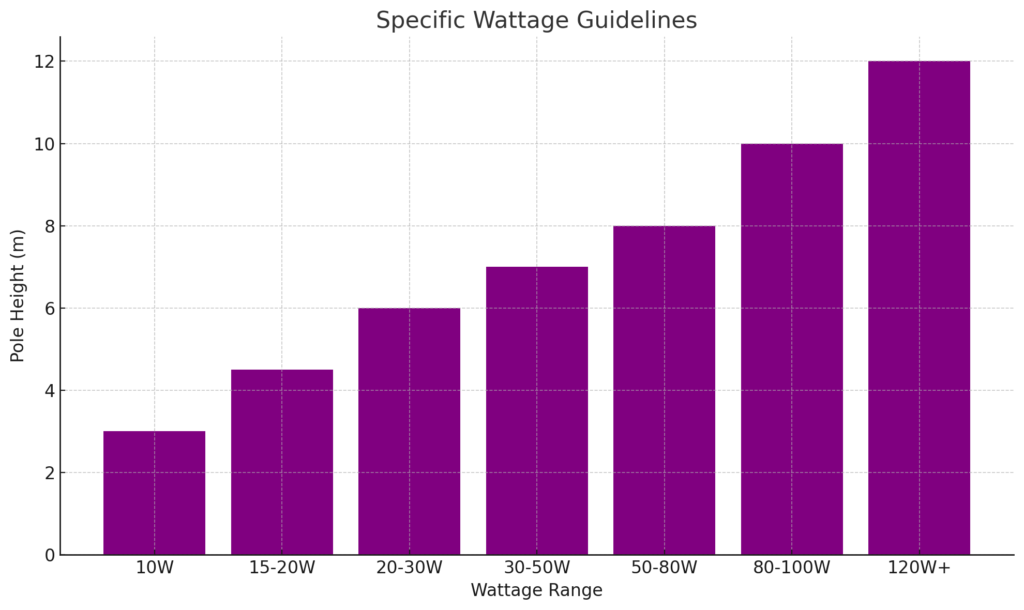
Specific Wattage Guidelines
Here are some specific wattage recommendations based on different pole heights and road widths:
- 10 Watts: Suitable for poles 2.5m to 3m high, ideal for narrow roads or small residential streets.
- 15-20 Watts: For poles 3m to 4.5m, providing moderate illumination for wider residential pathways.
- 20-30 Watts: Appropriate for poles 5m to 6m, covering roads up to 10m wide, often used in suburban areas.
- 30-50 Watts: For poles 6m to 7m, effective on two-lane roads or small urban streets.
- 50-80 Watts: Designed for poles 7m to 8m, suitable for wider roads with moderate to high traffic.
- 80-100 Watts: For poles 8m to 10m, ideal for broad roadways or main streets in cities and highways.
- 120 Watts and above: Reserved for major thoroughfares and highways where extensive coverage is required.
Conclusion
Choosing the right wattage for street lighting is essential to ensure proper illumination, safety, and energy efficiency. By considering factors such as pole height, road width, desired illumination levels, and the type of light source, you can make an informed decision that best suits your specific needs. Always aim to balance brightness, energy consumption, and cost-effectiveness for optimal lighting solutions.
For any additional guidance on selecting the right wattage, be sure to consult with a lighting expert or check industry standards to ensure you’re making the best choice for your street lighting projects.
Explore more about choosing the right streetlights on MVS’s Complete Guide to Streetlight Certifications..