Floodlight On / Off Control for Outdoor Lighting

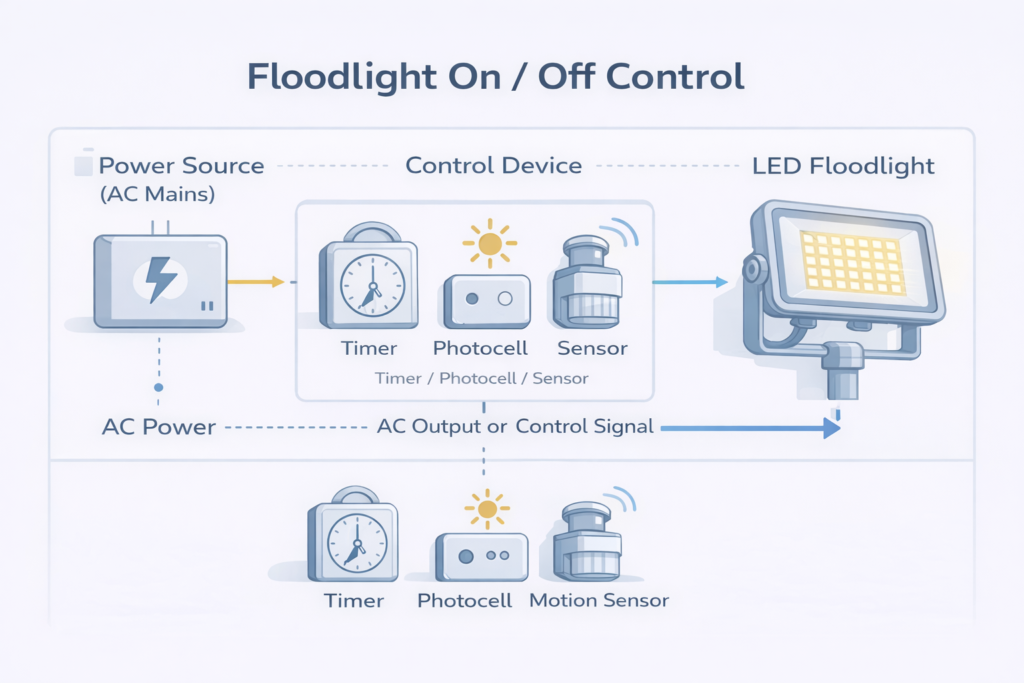
Floodlight on / off control focuses on simple and reliable switching for outdoor lighting applications. It covers timers, photocells, motion sensors, and centralized switching, helping projects achieve stable operation with low maintenance.

What Is Floodlight On / Off Control

Floodlight on / off control refers to the method of switching floodlights fully on or off through external control devices or power control. Unlike dimming systems, on / off control focuses on stable power switching or control signal triggering, making it suitable for most outdoor lighting projects.

In practical installations, on / off control is commonly achieved by cutting or supplying power, or by using external controllers to trigger the LED driver. The control method selected directly affects system stability, wiring complexity, and long-term reliability in outdoor environments.

Common Floodlight On / Off Control Methods

Different floodlight on / off control methods are used depending on site conditions, control accuracy, and maintenance requirements. The following comparison outlines the most common solutions applied in outdoor lighting projects.

Control MethodTypical ApplicationsAdvantagesConsiderationsWiring Complexity
Manual Switch / BreakerSmall sites, testing, maintenanceSimple, low costNo automation, manual operationLow
TimerFacade lighting, signage, yardsFixed schedule, stable operationNo response to daylight changesMedium
Photocell (Dusk-to-Dawn)Parking lots, roadsides, perimeter areasAutomatic based on ambient lightPlacement affects accuracyLow
Motion SensorSecurity zones, low-traffic areasEnergy saving, on-demand lightingRisk of false triggeringMedium
Contactor / Relay ControlLarge-scale installationsCentralized control, scalableRequires proper surge protectionHigh

Control method selection should consider site environment, switching frequency, and outdoor protection requirements.

Typical Wiring Scenarios for Floodlight On / Off Control

Typical floodlight on / off control is implemented through different wiring arrangements depending on the selected control device and project scale. Below are common wiring scenarios used in outdoor lighting installations.

Photocell Control Wiring

Photocell control switches floodlights automatically based on ambient light levels. The photocell is usually installed at an open location to accurately detect daylight and control one or multiple floodlights simultaneously.

USE IN:
Parking areas, perimeter lighting, roadsides

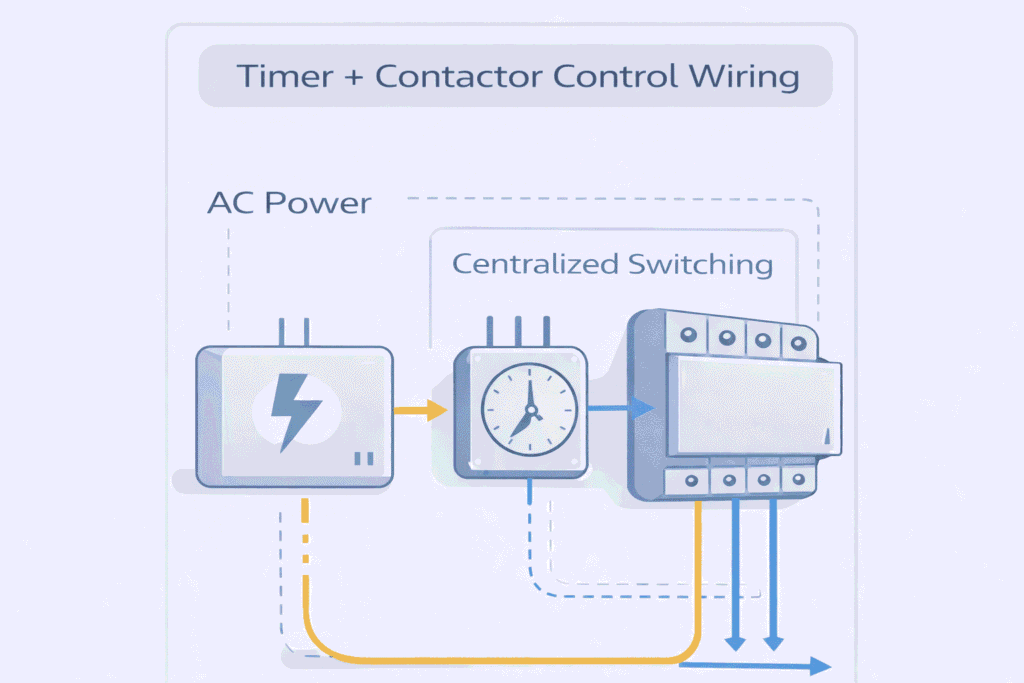
Timer control uses a fixed schedule to turn floodlights on and off at preset times. It is often combined with contactors when controlling multiple floodlights in large outdoor installations.

USE IN:
Building façades, signage lighting, industrial yards

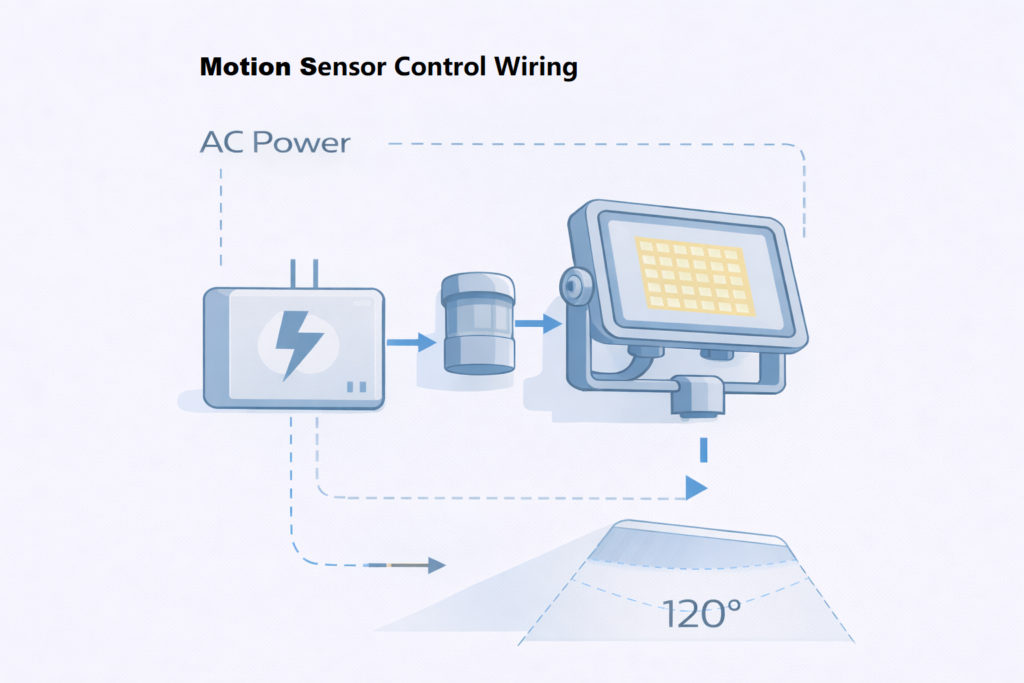
Motion sensor control activates floodlights when movement is detected within a defined area. Proper sensor positioning is critical to avoid false triggering caused by heat sources or reflections.

USE IN:
Security zones, low-traffic areas

Outdoor Reliability Considerations for Floodlight On / Off Control

Reliable floodlight on / off control in outdoor environments depends not only on the control device itself, but also on wiring design, protection measures, and component compatibility. The following factors should be carefully considered in real projects.

Surge Protection

Outdoor switching circuits are exposed to lightning and grid surges. Proper surge protection devices help prevent controller and driver damage during frequent on / off operations.

Waterproof Connections

Poor cable glands or junction boxes often cause moisture ingress. All control wiring should use outdoor-rated connectors to maintain stable switching.

Inrush Current Control

When multiple floodlights switch on simultaneously, high inrush current may stress drivers and contactors. Proper component selection is essential.

Driver Compatibility

Not all LED drivers are suitable for frequent power switching. Driver compatibility should be verified when using external on / off control devices.

Sensor Placement

Incorrect sensor positioning can lead to false triggering caused by heat sources, reflections, or passing vehicles, especially in outdoor environments.

Maintenance Accessibility

Controllers and wiring points should remain accessible for inspection and replacement without dismantling the entire lighting system.
Reliable On / Off Control for Floodlight Systems

As one of the most basic and widely used functions in floodlighting, On / Off control places higher demands on product reliability and supplier quality.
Under long operating hours or frequent switching conditions, the stability of the driver, electrical design, and overall quality management become critical. Our Floodlight On / Off products are built on proven configurations and are supplied with a 5-year warranty, ensuring dependable performance in real projects.
In addition, these products are TÜV CE CB certified, meeting international standards for electrical safety and structural reliability, allowing project owners and contractors to select them with confidence.

Application-Based Floodlight On / Off Control Recommendations

Different outdoor applications require different floodlight on / off control strategies. The recommendations below are based on typical site conditions, operating patterns, and maintenance considerations.

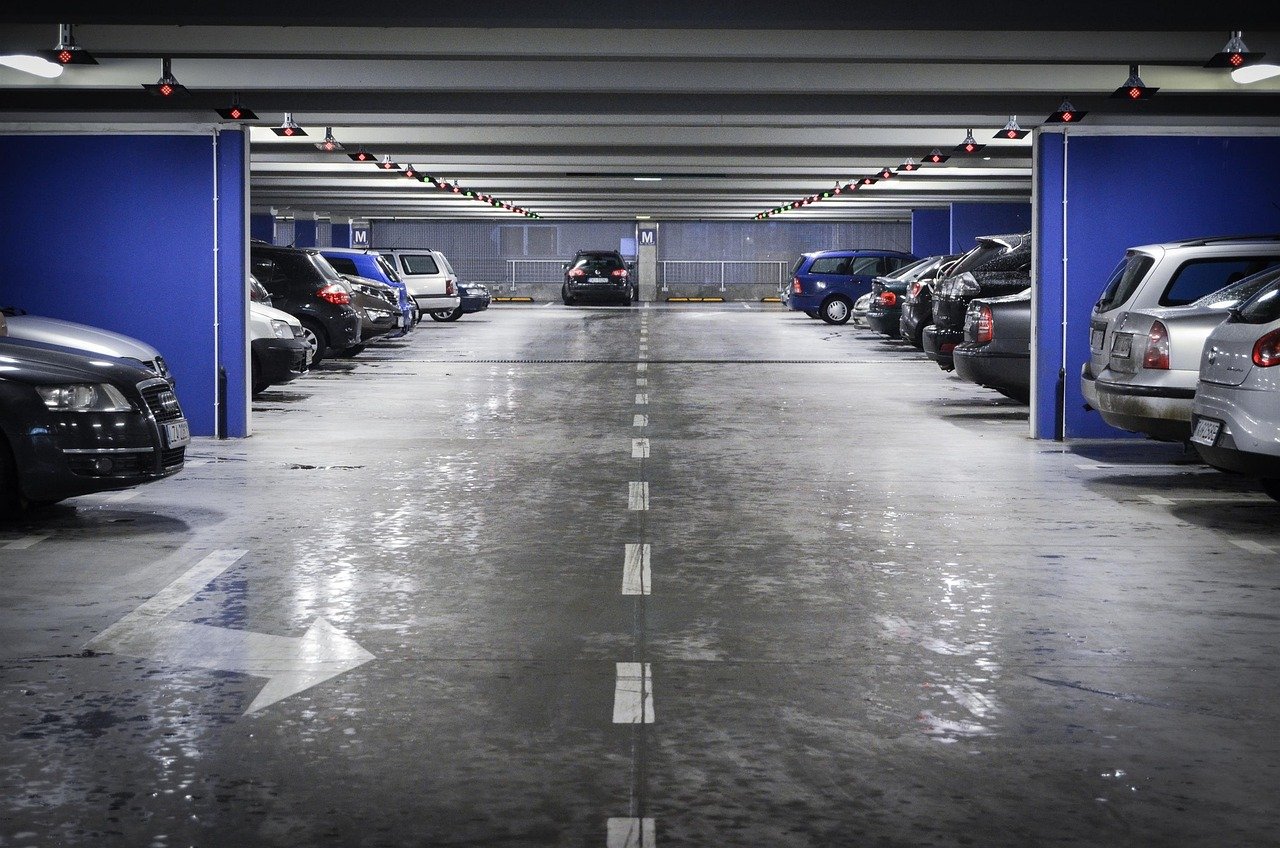
A well-lit underground parking lot with multiple rows of parked cars on both sides. The parking space is equipped with overhead lights, some of which have red indicators, likely showing occupied spaces. The floor is clean and reflective, with white arrows and lane markings guiding vehicles.
Parking Areas

Recommended control: Photocell or timer with backup Photocell control ensures dusk-to-dawn operation, while a timer can be used as a secondary schedule for reliability.

Building Facades

Recommended control: Timer-based switching Facade lighting typically follows fixed operating hours, making timer control simple and consistent.

Industrial workshop and factory area illuminated by LED floodlights for production lighting
Industrial Yards

Recommended control: Timer + contactor centralized control Centralized switching allows multiple floodlights to be controlled reliably from a single point.
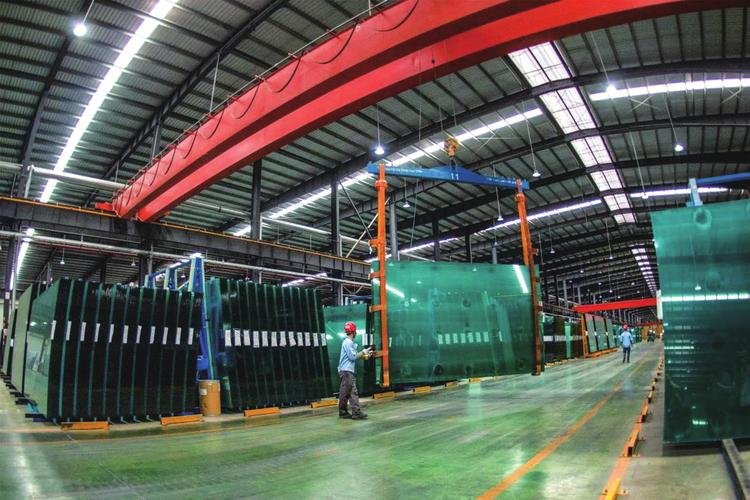
Factory lighting

Recommended control: Motion sensor control Motion-based control provides reliable lighting response in factory environments, supporting safe movement and operational efficiency while minimizing power usage during idle periods.

What to Specify for Floodlight On / Off Control Projects

To ensure a suitable floodlight on / off control solution, the following information is typically required
during project planning and quotation stages.

Project application (parking area, facade, yard, security zone, etc.)
Supply voltage (AC110V / 220V / 277V / 480V)
Floodlight quantity and wattage range
Mounting method (wall, pole, bracket)
Preferred on / off control method (timer, photocell, sensor, centralized control)
Outdoor protection requirements (IP rating, surge protection)
Cable length and wiring conditions
Required certifications (CE, CB, etc.)

CTA: Share your project details to receive a suitable on / off control recommendation.


Request a Suggestion

Frequently Asked Questions About Floodlight On / Off Control

Can one controller switch multiple floodlights?

Yes. Photocells, timers, or contactors can be used to control multiple floodlights simultaneously, provided the wiring capacity and load limits are properly designed.

Frequent switching may affect driver components if not properly selected. Using drivers suitable for on / off control and limiting unnecessary switching helps maintain long-term reliability.

Proper sensor placement, correct detection angle, and avoiding heat sources or reflective surfaces are key factors in reducing false triggering in outdoor environments.

Yes. Outdoor floodlight control circuits are exposed to lightning and grid disturbances. Surge protection is strongly recommended to protect controllers and LED drivers.

Yes. Most outdoor floodlights can work with external contactors or relays, as long as driver compatibility and inrush current are considered during system design.

Ask For A Quick Quote

We will contact you within 1 working day, please pay attention to the email with the suffix “info@ledmvs.com”