
A Practical Approach to Reliable and Efficient Lighting Design
Why Outdoor Lighting Projects Often Face Issues
In commercial projects, lighting problems usually do not come from a single factor. In our experience, most issues originate from early-stage planning decisions.
Common situations observed in projects:
- Insufficient brightness after installation
- Uneven light distribution across the area
- Unexpected maintenance within the first year
- End-user complaints regarding visibility
These situations are often related to design assumptions rather than product defects.
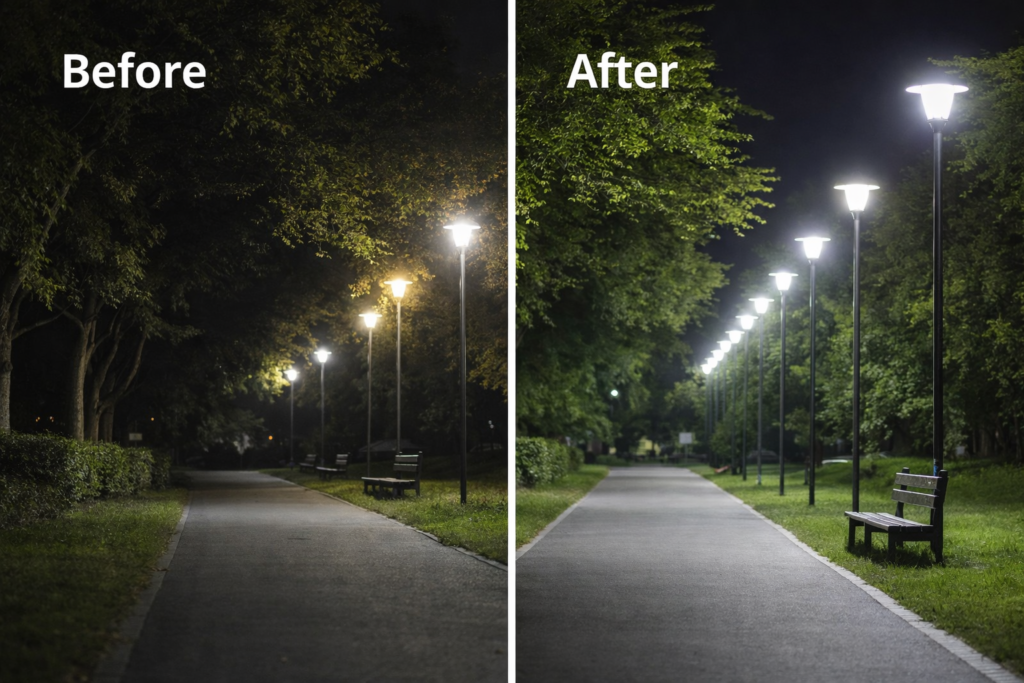
Step 1 – Define the Lighting Application Clearly
The starting point of any lighting project is a clear understanding of the application.
Different scenarios require different lighting strategies, even when similar products are used.
Typical applications include:
- Roads and highways
- Parking areas
- Industrial zones
- Sports and large outdoor spaces
In many cases, selecting products before defining the exact application can lead to mismatched performance expectations.
Step 2 – Determine Required Lux Levels
Lighting design is more accurate when based on illumination (lux) rather than wattage alone.
Reference for common applications:
| Application Area | Recommended Lux |
|---|---|
| Road lighting | 20–50 lux |
| Parking lot | 30–75 lux |
| Industrial area | 50–100 lux |
| Sports field | 200–1000 lux |
Using wattage as the only reference may result in either over-design or insufficient lighting performance.
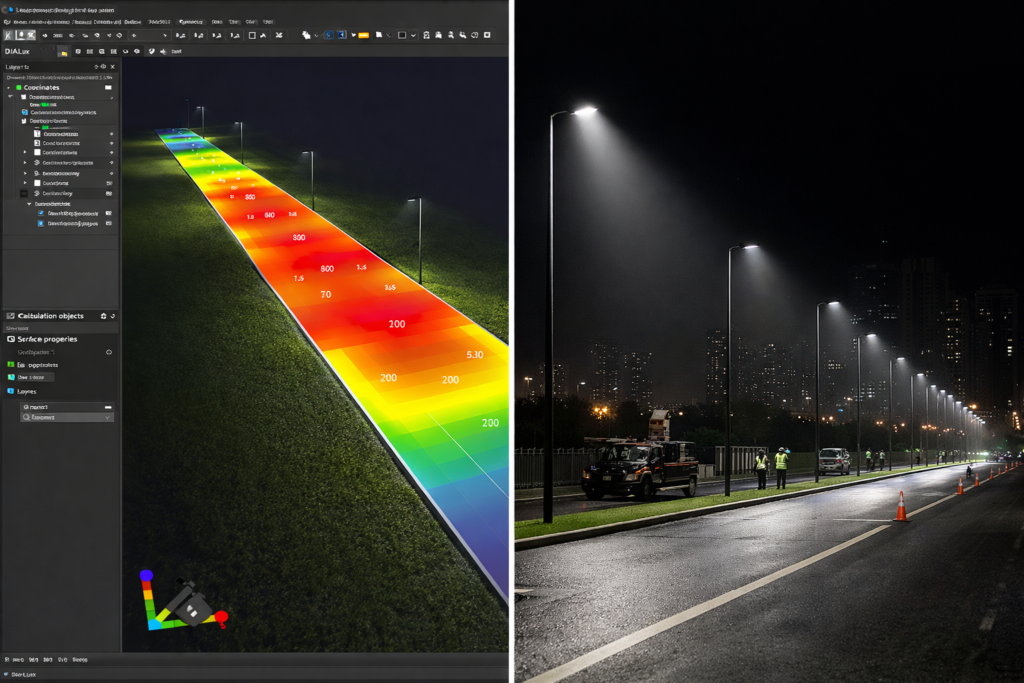
Step 3 – Select Proper Beam Angle
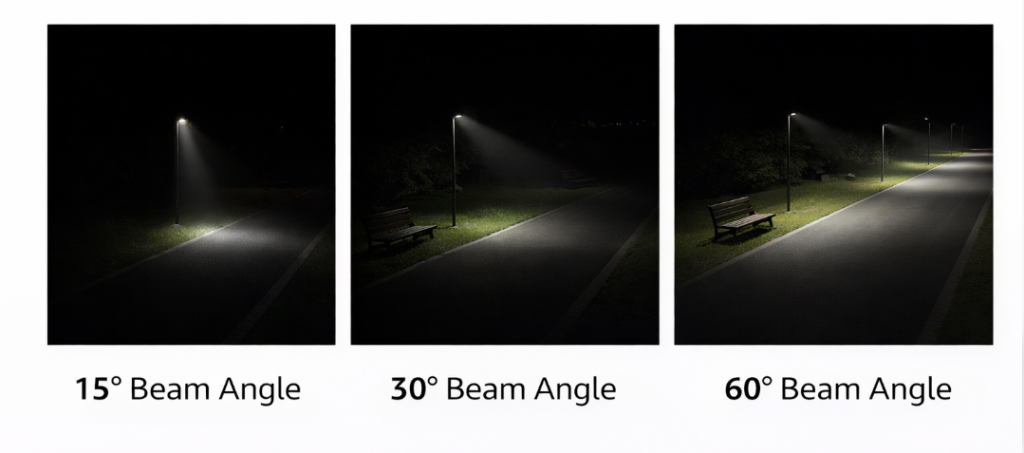
Beam angle plays a key role in how light is distributed across a surface.
In practice, beam angle selection is sometimes overlooked, especially when the focus is mainly on power or lumen output.
General selection reference:
| Application | Recommended Beam Angle |
|---|---|
| Road lighting | Type II / Type III |
| Parking lot | Type III / Type IV |
| Stadium | 15° / 30° / 60° |
An unsuitable beam angle may lead to uneven illumination or unnecessary overlap, which affects both performance and efficiency.
Step 4 – Choose a Stable LED Driver
Driver stability has a direct impact on the long-term performance of the lighting system.
In many projects, performance issues are related more to driver behavior than to LED chips.
Key considerations:
- Brand reliability
- Surge protection level
- Thermal stability
Lower-cost driver options may reduce initial investment, but they are sometimes associated with higher maintenance frequency over time.

Step 5 – Consider Heat Dissipation and Environment
Environmental conditions play an important role in outdoor lighting performance.
Factors to consider:
- Ambient temperature
- Humidity and dust levels
- Corrosion risk (coastal areas)
In higher temperature regions, thermal management becomes particularly important, as excessive heat may accelerate lumen depreciation.
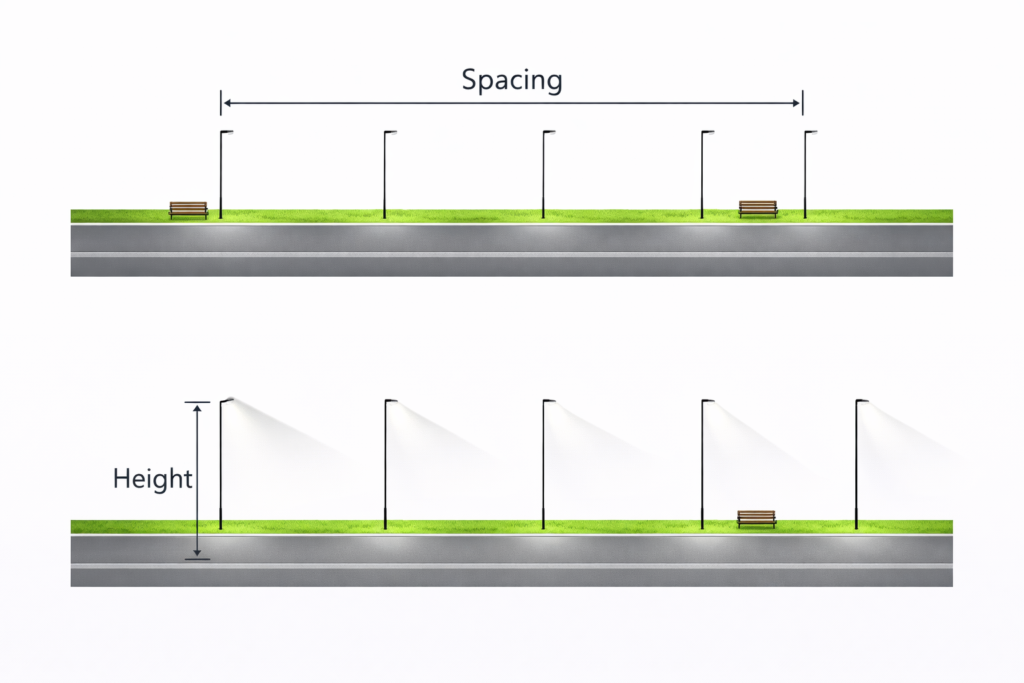
Step 6 – Optimize Pole Height and Spacing
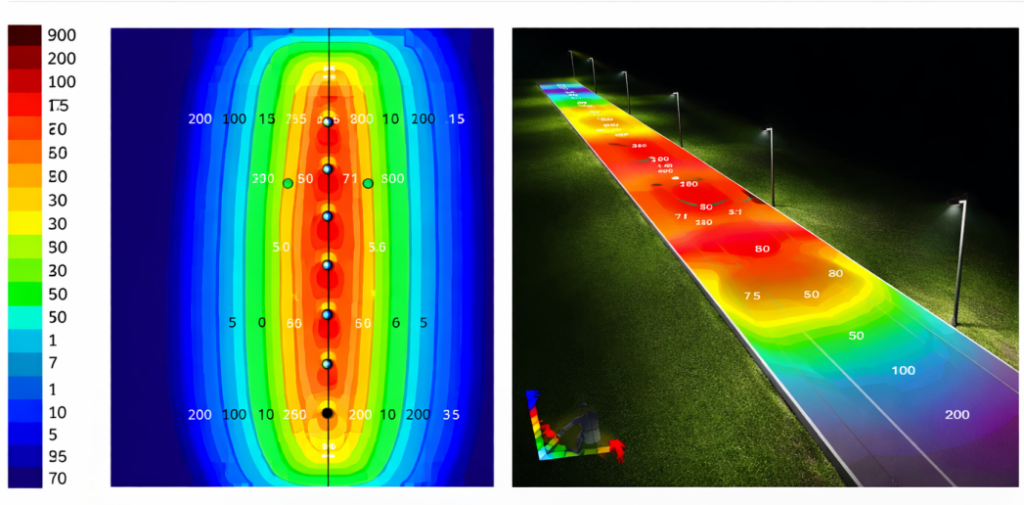
Pole height and spacing influence both lighting quality and project cost.
General reference:
| Pole Height | Spacing Distance |
|---|---|
| 6m | 18–24m |
| 8m | 24–30m |
| 10m | 30–36m |
Spacing that is too wide may create dark zones, while overly dense layouts can increase cost without significant performance improvement.
Step 7 – Work with a Professional Supplier
Beyond product supply, technical support is often an important part of project success.
Typical support may include:
- Lighting simulation (e.g., DIALux)
- Product selection guidance
- Custom configuration options
- Delivery planning
Working with a supplier who understands project requirements can help reduce coordination effort and uncertainty.
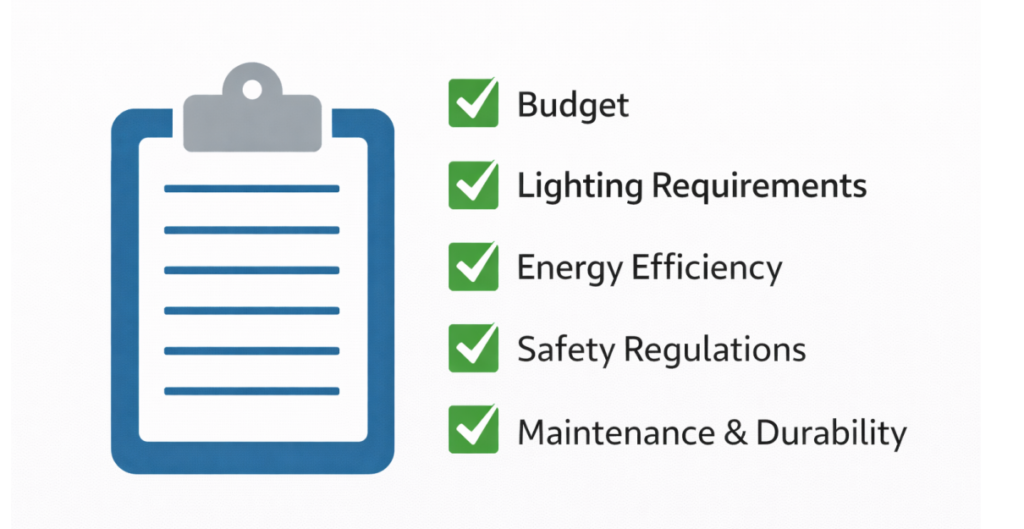
Common Considerations in Project Planning
Based on practical observations, several aspects are often worth additional attention:
- Price differences may reflect variations in internal components
- Lighting layout decisions can have a long-term impact on usability
- Certification details may vary depending on supplier standards
- Environmental factors are sometimes underestimated
These factors are not always immediately visible but can influence overall project outcomes.
Project Support and Next Steps
For commercial outdoor lighting projects, a structured approach to design can improve both performance and cost efficiency.
If needed, support may include:
- Lighting layout suggestions
- Product configuration references
- Application-based recommendations
A clear design direction at the beginning often helps reduce adjustments later in the project.