Timer Dimming for LED Street Lights: What Buyers Need to Know (2025 Guide)
What Is Timer-Based Dimmi
The 5G streetlight goes far beyond lighting. It combines illumination, communication, and intelligence into one integrated system that supports 5G base stations, real-time monitoring, and data interaction. As cities move toward digital transformation, 5G streetlights become the backbone of smart urban infrastructure, connecting everything from vehicles to sensors.
A 5G streetlight is a new-generation smart city terminal, integrating lighting, communication, and digital interaction into one.
Each streetlight pole houses 5G micro base stations, turning the city’s lighting network into a dense communication grid that supports ultra-fast connectivity for devices, vehicles, and people.
Beyond lighting, it serves as the foundation for AI monitoring, vehicle-to-infrastructure communication, environmental sensing, and public information display.
It’s a core enabler of smart urban management — where every light pole becomes a data and connectivity hub.
The 5G streetlight represents a new era of integrated city infrastructure.
It combines communication, sensing, and intelligent control, giving each pole three major capabilities:
5G Micro Base Station Carrier
Deployed as part of the 5G network, the streetlight pole houses small base stations that extend high-speed coverage to every corner of the city.
It helps overcome signal attenuation and ensures dense, continuous network coverage even in complex urban environments.
Smart Application Enabler
With 5G’s high bandwidth and ultra-low latency, streetlights support real-time HD video surveillance, AI recognition, and vehicle-road communication.
They collect and transmit massive sensor data instantly, enabling smarter city management and rapid emergency response.
Public and Commercial Service Hub
Beyond lighting, each pole offers public Wi-Fi, information displays, emergency call functions, and energy-efficient dimming control.
By merging multiple utilities into one, it delivers “multi-pole integration”—reducing clutter while enhancing city aesthetics.
To understand the evolution of smart lighting, it’s essential to compare the two mainstream technologies — NB-IoT streetlight and 5G streetlight.
While both contribute to smart city construction, their positioning, capacity, and data handling differ significantly.
| Feature | NB-IoT Streetlight | 5G Streetlight |
|---|---|---|
| Core Role | City data collector | City intelligence node |
| Communication | NB-IoT narrowband | 5G enhanced broadband |
| Data Flow | Small, low-speed, intermittent | Massive, high-speed, continuous |
| Typical Use | Lamp control, energy monitoring, fault alert | HD video, AI analytics, vehicle-road coordination |
| Network Need | Low power, wide area | High bandwidth, low latency |
| Analogy | “Text message” | “Live video broadcast” |
Summary:
Rather than replacing NB-IoT, 5G and NB-IoT work together, forming a multi-layered smart lighting network that covers both low-power and high-data-rate applications.
The introduction of 5G streetlights marks a technological leap in urban infrastructure.
By combining connectivity and intelligence, they bring multiple advantages to city development:
1.Accelerated 5G Deployment
Utilizes existing streetlight poles to host 5G micro base stations, enabling faster network rollout without additional land or tower construction.
2.Multi-Pole Integration
Combines lighting, traffic signals, surveillance cameras, and base stations into one elegant structure — reducing clutter and visual pollution in the cityscape.
3.Unified Management & Cost Efficiency
Centralized design, installation, and maintenance lower the total lifecycle cost for municipalities and telecom operators.
4.Smart City Empowerment
Creates the digital foundation for data collection, environmental sensing, and public safety monitoring, driving the transformation toward truly intelligent cities.
While 5G streetlights offer transformative potential, their implementation also brings notable challenges that cities and integrators must address carefully:
High Initial Investment
5G base stations, sensors, and edge computing servers significantly increase the upfront cost of each installation.
Complex Product Design
Integrating multiple systems lighting, communication, sensors, and displays requires advanced industrial design and structural safety planning.
Cross Department Coordination
Operations involve telecom, traffic, public safety, and municipal management departments, demanding strong governance and data sharing frameworks.
Data Security & Privacy Protection
Massive real-time data streams, including video, must comply with strict cybersecurity and privacy regulations.
💡 MVS addresses these challenges with modular system architecture, certified components, and professional project engineering to ensuring stability, safety, and scalability from day one.
5G streetlights serve as intelligent nodes across multiple urban environments. Their flexibility and connectivity make them the backbone of smart city infrastructure in diverse application scenarios:

Ensure continuous 5G coverage for vehicle-to-infrastructure communication, traffic monitoring, and adaptive lighting control.

Support high-speed data transmission for digital billboards, public Wi-Fi hotspots, and real-time foot traffic analysis.

Enable stable 5G connectivity for machinery, IoT sensors, and automated logistics management.
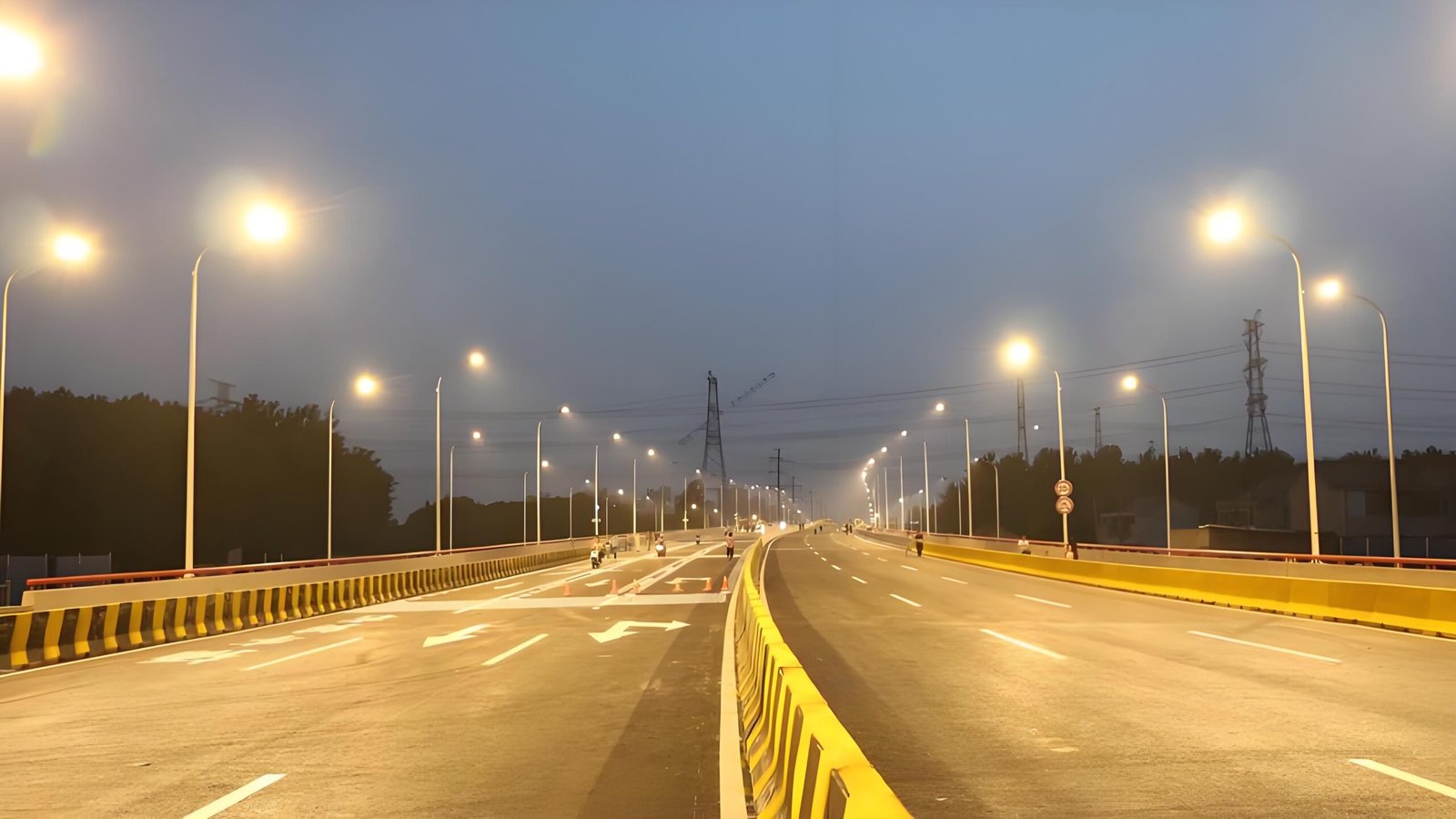
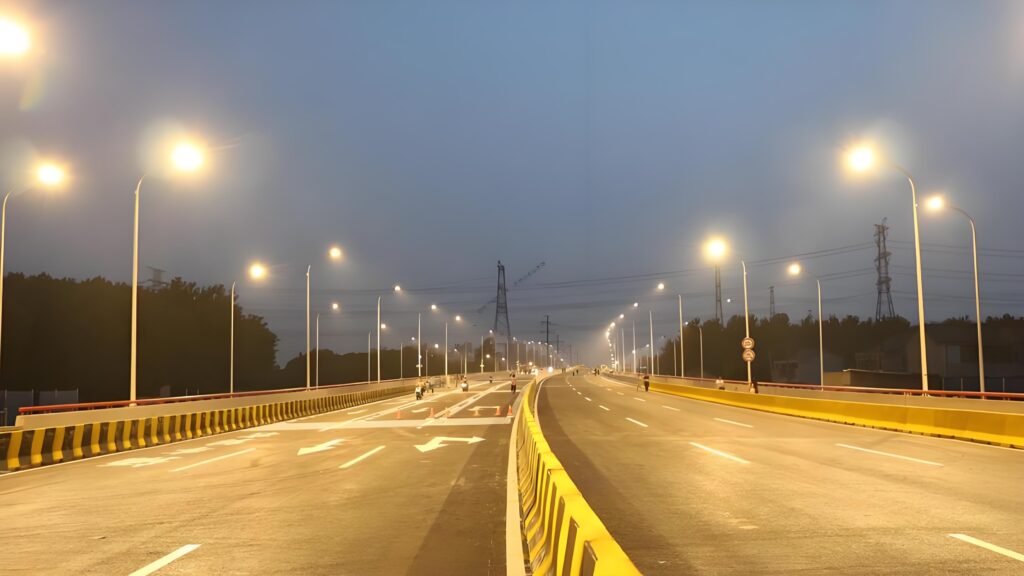
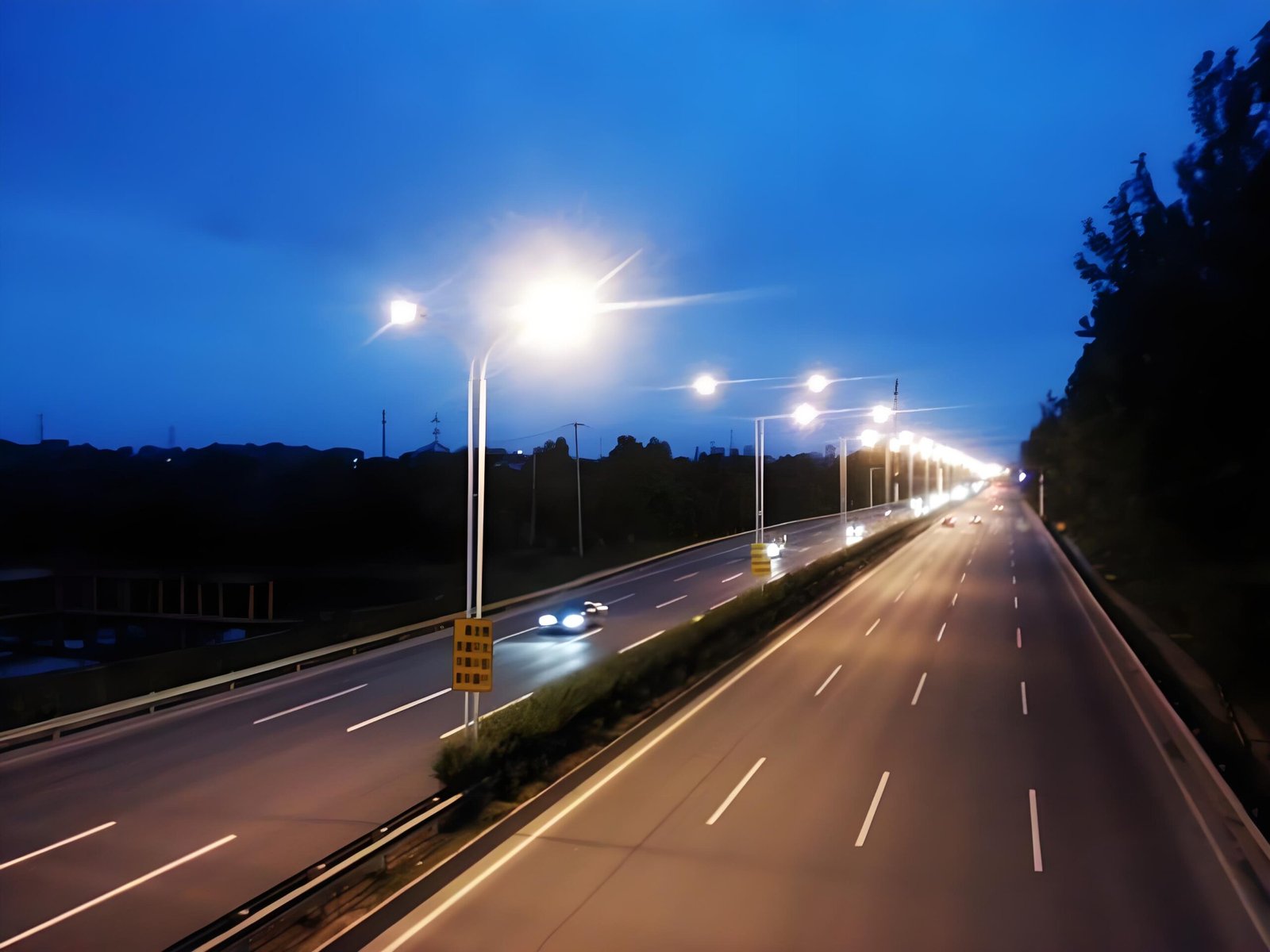
Ensure uniform illumination and reliable 5G connectivity along expressways. Supports real-time traffic monitoring, vehicle-to-infrastructure communication, and adaptive brightness control for enhanced safety and energy efficiency.

Provide reliable 5G connectivity for logistics tracking, fleet communication, and remote surveillance operations.

Enhance passenger experience through high-bandwidth 5G coverage, smart navigation, and integrated emergency systems within terminals and surrounding road networks.
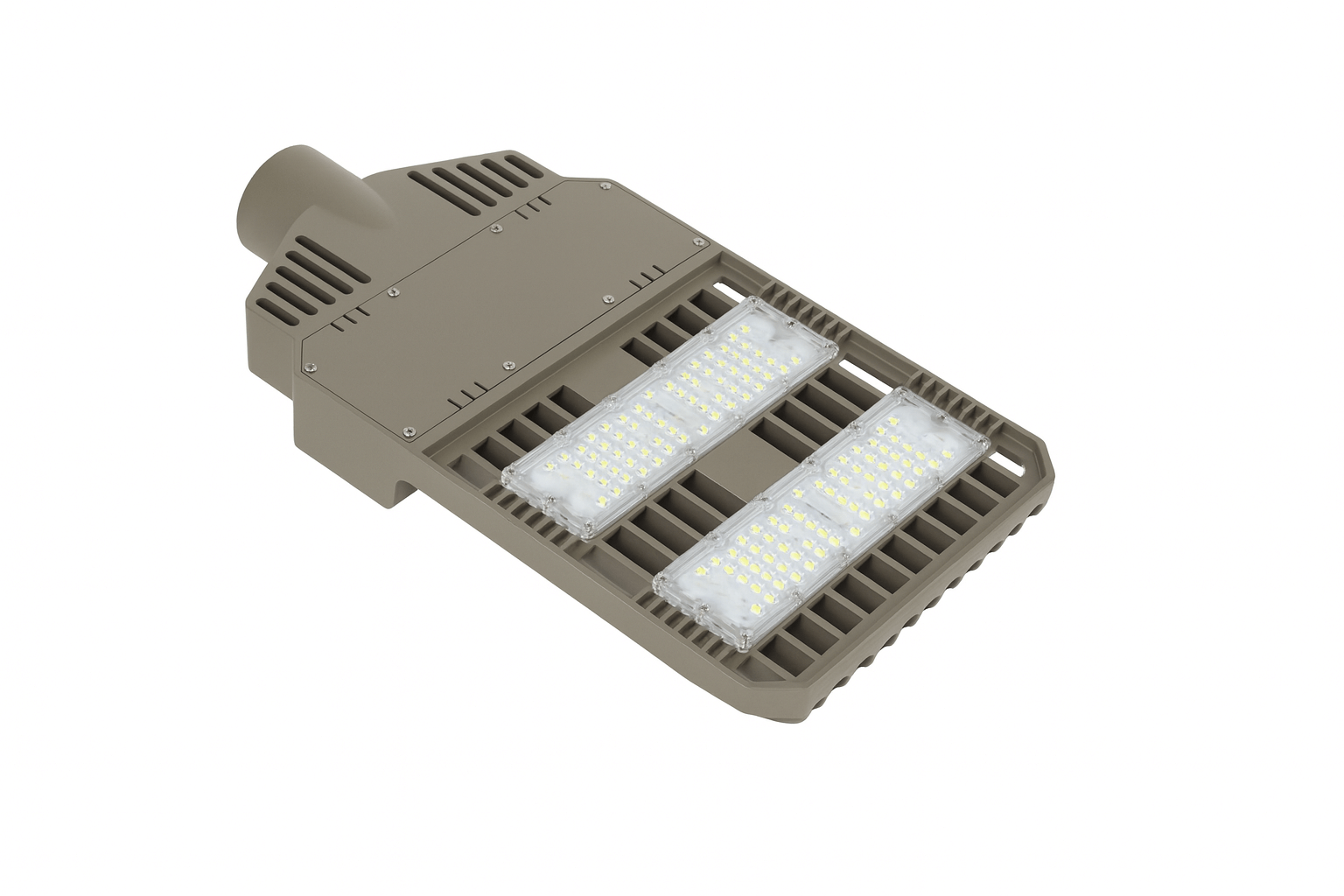
👉 Empower every corner of your city from highways to airports with intelligent 5G lighting solutions from MVS.
Building a 5G streetlight network requires not only advanced technology but also a reliable manufacturing partner who understands both lighting systems and telecommunication integration.
MVS provides a complete one-stop solution that covers design, production, and customization.
Strong Manufacturing Capability
With 15+ years of factory experience and five fully automated production lines, MVS ensures precise manufacturing and stable quality for every smart streetlight system.
All products comply with international standards (CE, CB, RoHS, ISO9001) to meet municipal and telecom project requirements.
Integrated Engineering & Smart Control Expertise
MVS offers deep expertise in multi-protocol communication systems, including DALI, LoRa, Zigbee, NB-IoT, and 5G-based control.
Our team supports DIALux simulations, wiring design, and 3D installation modeling to ensure engineering compatibility.
Customized 5G Streetlight Design
We provide customized pole structures, module layouts, and communication interfaces tailored to each city’s network topology and aesthetic requirements.
Modular design allows seamless integration of 5G micro base stations, cameras, and environmental sensors within one unified system.
Global Project Support & After-Sales Assurance
MVS has exported to over 30 countries, supporting clients in telecom infrastructure and municipal lighting.
Every project is backed by a 5-year warranty, responsive technical support, and long-term spare part supply.
CTA:
👉 Partner with MVS to transform your lighting infrastructure into a connected 5G smart network engineered for reliability, scalability, and the future of urban intelligence.
A: Yes. Even without 5G connectivity, it can still function as a smart streetlight, performing lighting control, energy monitoring, and IoT data collection. The 5G module can be added or upgraded later when network conditions are ready.
A: Generally, the optimal distance is 100 to 200 meters, depending on the urban environment, building density, and 5G frequency band used by the telecom operator.
A: Absolutely. Many MVS smart streetlight models support hybrid integration, allowing NB-IoT modules to handle basic control and 5G modules to transmit large data such as video and real-time analytics.
A: MVS uses modular heat-dissipation chambers and aluminum alloy housings to ensure temperature stability for base stations, sensors, and lighting modules under continuous operation.
A: We provide full engineering support — from system design, photometric analysis, and CAD pole customization to on-site installation guidance and 5-year warranty after-sales service for global clients.
💡 Still have questions? Contact our team today to discuss your 5G streetlight project and receive a tailored technical proposal from MVS.
The 5G streetlight is more than a lighting product — it’s a new foundation for urban connectivity, data interaction, and digital infrastructure.
As cities evolve toward intelligent transformation, MVS stands ready to support you with engineering expertise, manufacturing strength, and custom 5G integration capabilities.
Whether you are a telecom integrator, municipal contractor, or smart city developer, our team will help you design and implement a scalable 5G lighting network tailored to your project’s needs.
💡 Ready to transform your city lighting network?
👉 Contact MVS Today – Request your customized 5G streetlight solution plan and professional engineering support.
Discover our latest lineup of high-performance outdoor lighting solutions, designed for professional projects worldwide.
Each series offers advanced optical design, reliable drivers, and a 5-year warranty — ensuring long-term performance and stability.
Our catalog offers modular, energy-saving, and high-performance LED solutions. Share your project needs, and we’ll create a tailored lighting plan for you.
For more professional knowledge and practical guidance, visit our blog to discover in-depth articles on LED street lights and project solutions.
What Is Timer-Based Dimmi
Outdoor Lighting Installa
Introduction – Why Upgrad
Introduction As cities an
Introduction Outdoor ligh
How to Waterproof LED Lig