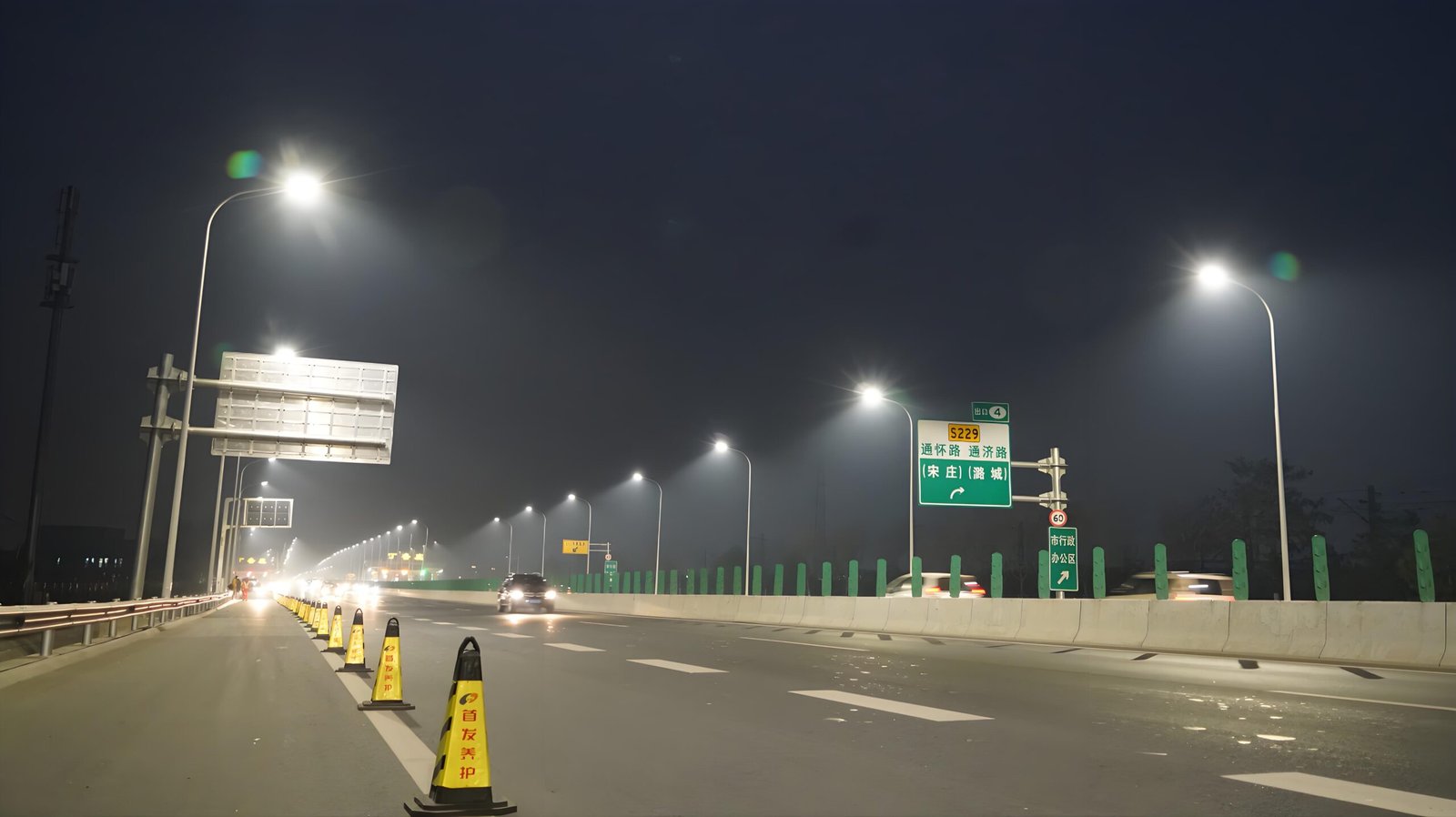
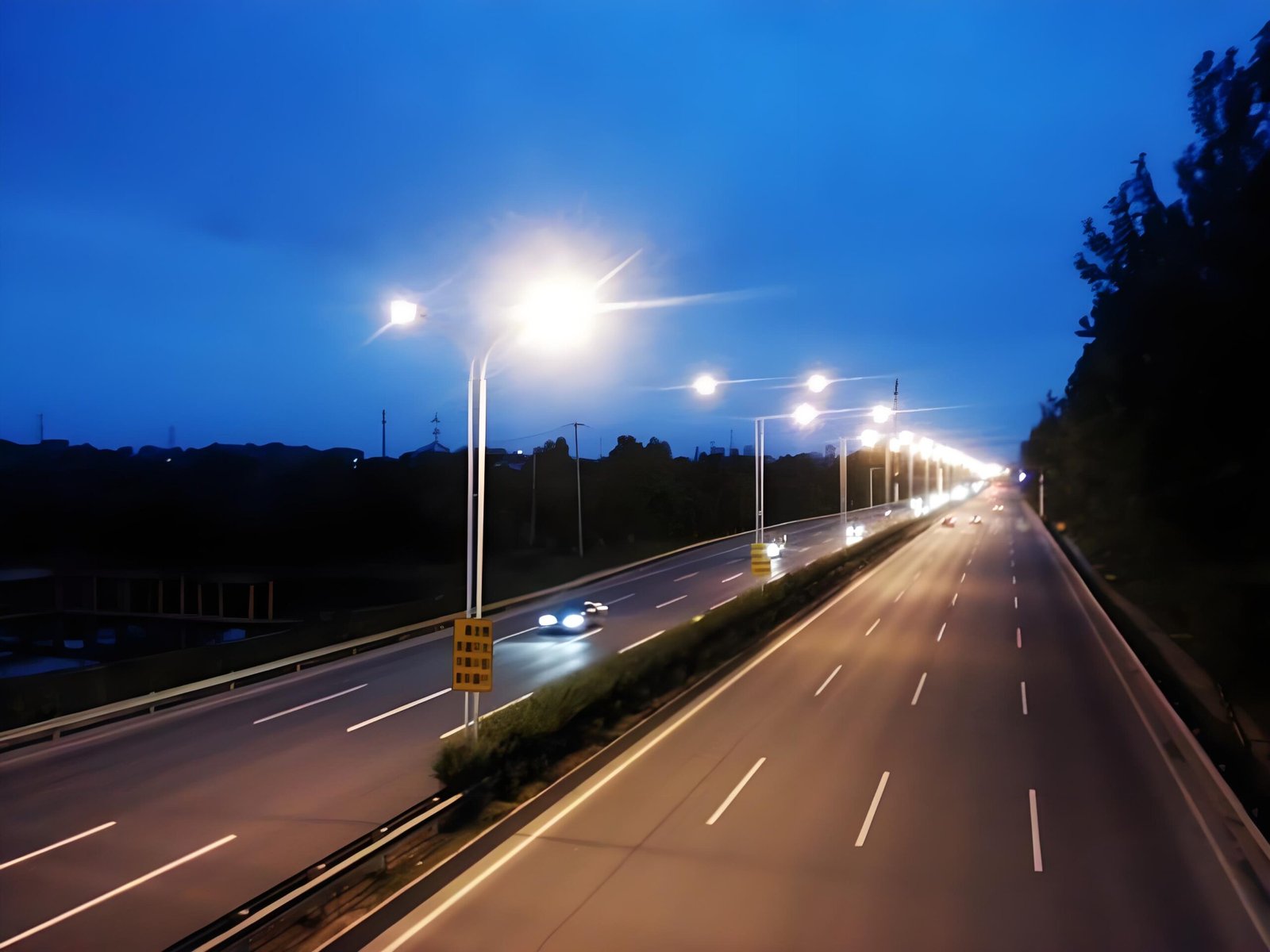
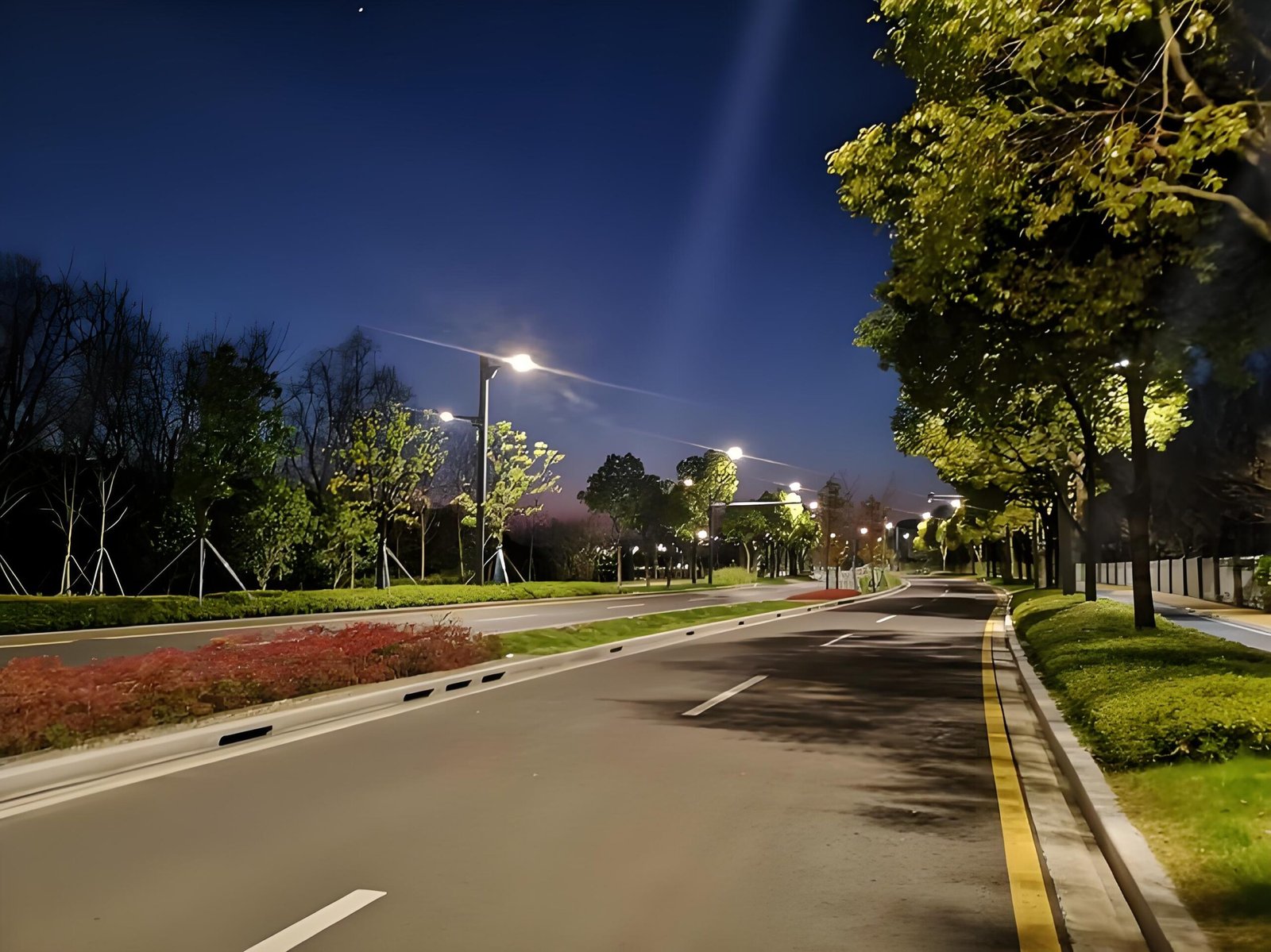
A 4G streetlight control system enables remote and intelligent management of road lighting through cellular communication. By integrating 4G control terminals with streetlight circuits and a centralized management platform, lighting operations such as on/off control, dimming schedules, fault monitoring, and energy optimization can be managed in real time without relying on local gateways. This solution is designed for modern urban roads, highways, and distributed outdoor lighting projects that require reliable connectivity and efficient operation.
The 4G streetlight control system is built on a layered architecture that combines street lighting hardware, circuit-level control, cellular communication, and a centralized management platform. Each streetlight circuit is connected to a 4G control terminal, which communicates directly with the cloud platform through the cellular network. This architecture allows lighting data to be transmitted and control commands to be executed independently for each circuit, enabling scalable deployment and centralized management without complex local infrastructure.
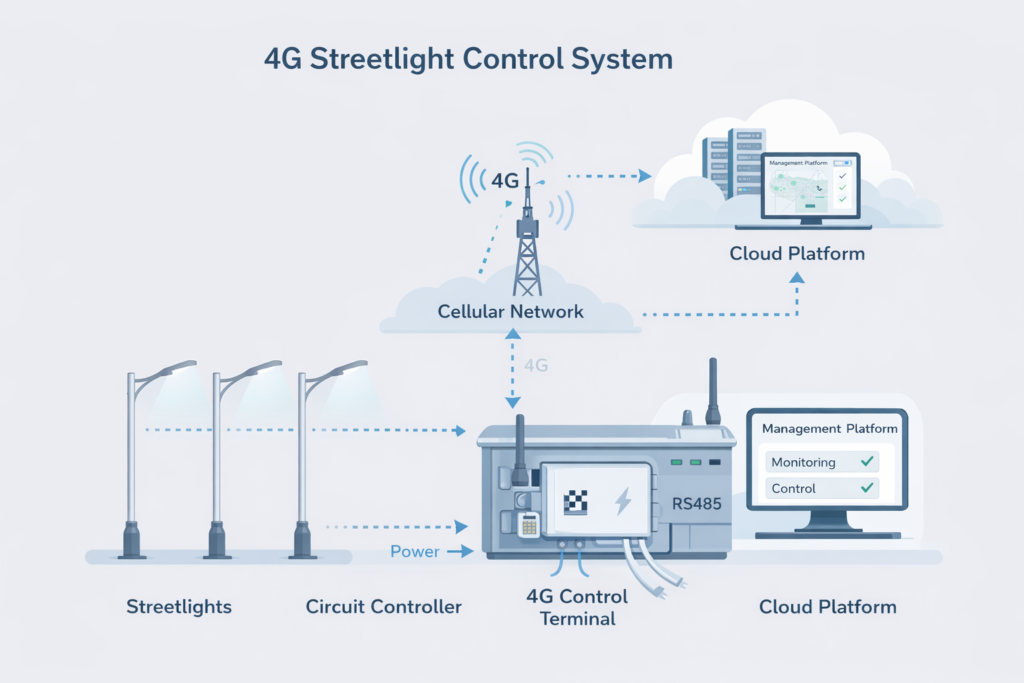
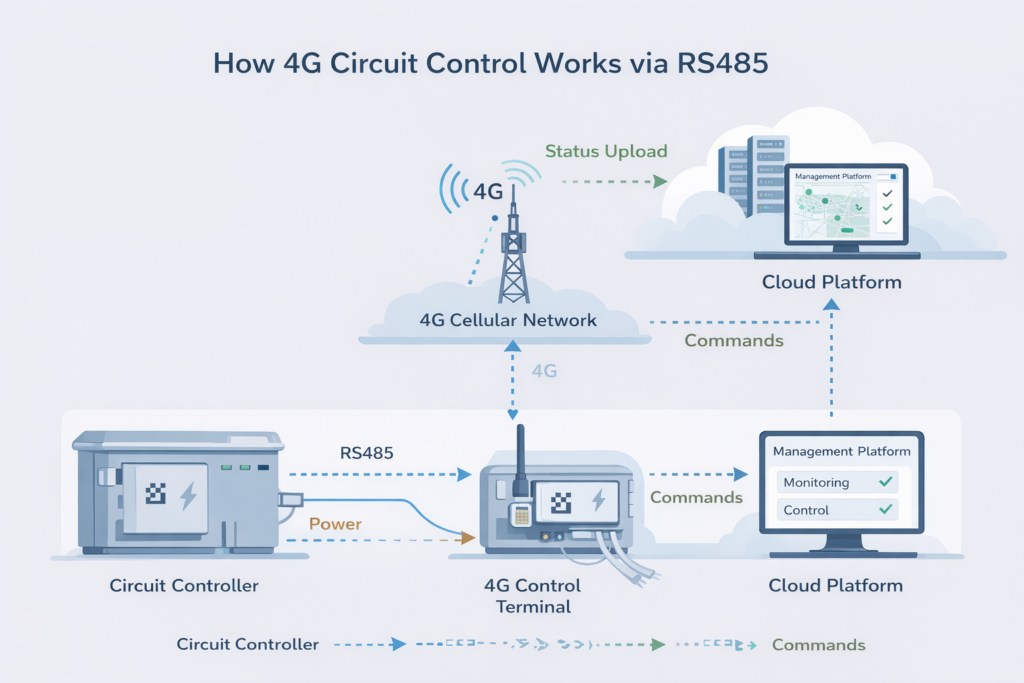
A 4G control terminal connects to the circuit controller through an RS485
interface, forming a reliable link for command and status transmission.
The terminal sends circuit status data to the cloud platform via the 4G
cellular network, and receives remote control commands from the platform
in return.
After the command is verified, the terminal triggers the circuit controller
to execute switching or scheduled control actions. This circuit-level
workflow supports independent strategy settings for each circuit, enabling
scalable operation, faster maintenance response, and centralized management
across multiple lighting zones.
Enable remote switching of streetlight circuits through the cloud platform, allowing operators to turn lights on or off without on-site intervention.
Each lighting circuit can be grouped or managed independently, supporting flexible control strategies for different road sections or zones.
Support time-based dimming schedules to adjust lighting output at different hours, improving energy efficiency while maintaining road safety.
Automatically control lighting based on local sunrise and sunset times, adapting operation schedules to seasonal changes without manual adjustment.
Monitor circuit status, communication conditions, and operating states in real time through a centralized management interface.
Detect abnormal conditions such as circuit faults or fire alarms and report them to the platform for faster maintenance response.
Intelligent control strategies allow streetlight circuits to operate
according to predefined time schedules and real-world lighting conditions.
By combining time-based dimming, group control, and sunrise–sunset
automation, lighting output can be adjusted dynamically throughout the
night.
This approach ensures sufficient illumination during peak traffic hours
while reducing power consumption during low-demand periods, delivering a
balanced solution for safety, energy efficiency, and long-term operation.

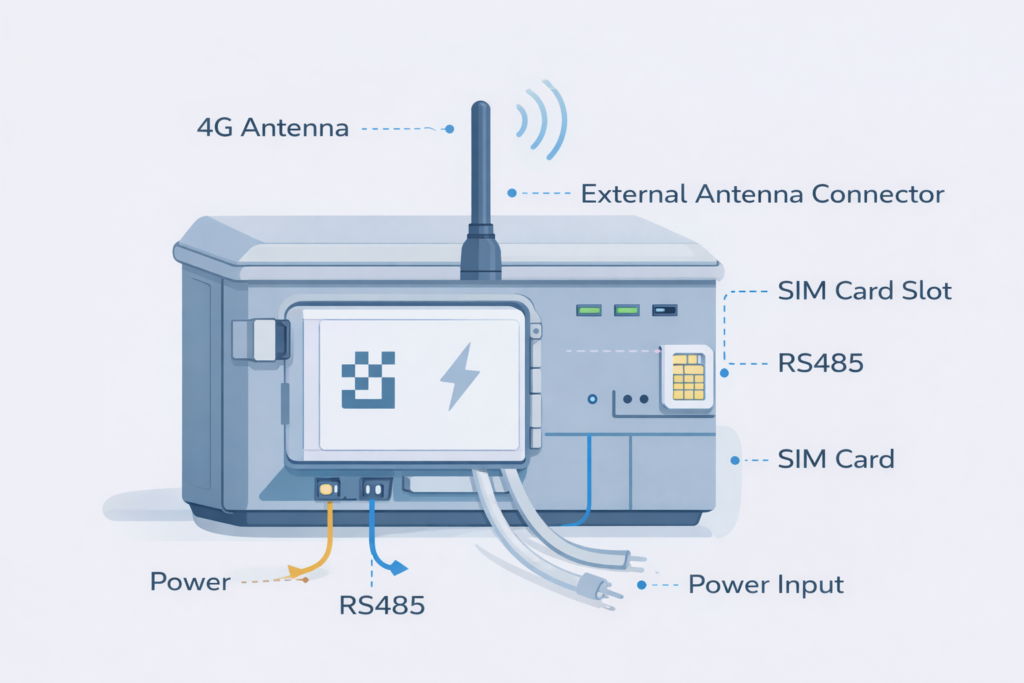
The 4G control terminal is designed as an industrial-grade device for
long-term outdoor operation. With a sealed enclosure and robust internal
structure, it supports stable communication and reliable circuit control
in harsh environments.
The terminal integrates essential interfaces for power input and RS485
communication, while maintaining low power consumption and wide voltage
compatibility to meet diverse deployment conditions in road lighting
projects. External antenna support and a replaceable SIM card design allow
flexible deployment across different regions.
4G communication provides a practical and reliable solution for streetlight control projects that require wide coverage, fast deployment, and centralized management. By using public cellular networks, each control terminal can communicate directly with the cloud platform without relying on local gateways or dedicated network infrastructure. This significantly reduces system complexity during installation and expansion.
Compared with short-range or private network technologies, 4G communication is particularly suitable for distributed road lighting environments, remote areas, and overseas projects where network conditions vary. With support for external antennas and replaceable SIM cards, the system can adapt to local operators and regional frequency bands, ensuring stable connectivity across different countries and deployment scenarios.
4G streetlight control systems are widely applied in road lighting projects that require flexible deployment, wide-area coverage, and centralized management. By eliminating dependence on local gateways, this solution is well suited for environments where network infrastructure is limited, dispersed, or subject to frequent changes.
Typical application scenarios include urban roads and arterial streets, highways and intercity roads, industrial parks, and newly developed areas where rapid installation is required. For overseas projects, especially in regions with diverse network conditions, 4G-based streetlight control provides a practical approach by allowing the use of local SIM cards and public cellular networks. This makes the system suitable for both permanent infrastructure and phased expansion projects.
A 4G streetlight control system delivers clear project-level value by simplifying deployment, improving operational efficiency, and supporting long-term scalability.
Our 4G streetlight control solution is designed to support real-world
road lighting projects that demand reliability, flexibility, and
long-term operation. By combining industrial-grade 4G control terminals
with circuit-level management and a centralized platform, the system
can be adapted to different road types, deployment scales, and regional
network conditions.
We support project-based configuration, allowing the solution to align
with specific operational and regulatory requirements across urban,
new development, and overseas deployment scenarios.